
Wondering if a yoga ball could help you go into labor naturally? Many expecting moms swear by it. Gentle movements on a birthing or yoga ball can encourage the baby to move into position and apply pressure on the cervix. So, what are the best yoga ball moves to induce labor?
Simple birthing ball exercises like hip circles, bouncing, rocking back and forth, and figure-eight motions can all help prepare your body for labor. These moves promote relaxation, open the pelvis, and may trigger contractions when your body is ready. It’s safe, low-impact, and often recommended by birth professionals.
Experts like doula and childbirth educator Penny Simkin support the use of fit ball to induce labour. Want to learn exactly how to move and when to start? Let’s roll through the most effective yoga ball exercises that may gently nudge labor into motion.
What Are Some Pregnancy Ball Exercises?
Pregnancy ball exercises are gentle, low-impact movements done using a stability or birthing ball designed to support the body during pregnancy. These exercises help open the pelvis, encourage optimal fetal positioning, and relieve common pregnancy discomforts like back pain, pelvic pressure, and stiffness.
Some common types of pregnancy ball exercises include:
- Pelvic Tilts: Rocking the pelvis forward and backward to ease lower back strain.
- Hip Circles and Rolls: Gentle circular motion to relax pelvic muscles.
- Wall Squats: Using the ball for support during squats to build lower body strength.
- Bouncing or Gentle Bobs: Encourages downward movement of the baby.
- Seated Figure Eights: Loosens hips and prepares the pelvis for labor.
These movements are often used in prenatal yoga and physiotherapy routines, and many care providers recommend them during the third trimester.
5 Yoga Ball Moves to Induce Labor Safely and Naturally
Below are five of the most effective yoga ball exercises that can help stimulate labor naturally. Each movement promotes alignment, relaxation, and space in the pelvis, which can assist in triggering labor when the body is ready.
1. Pelvic Circles
How to do it:
Sit comfortably on the birthing ball with your feet flat on the floor, shoulder width apart. Slowly rotate your hips in a circular motion, drawing an imaginary circle with your pelvis.
Why it helps:
Pelvic circles encourage mobility and flexibility in the pelvic joints, which can help your baby descend into the birth canal. This move also relieves tension in the lower back and hips, making it ideal for early labor preparation.
2. Bouncing on the Ball
How to do it:
While seated upright on the ball, gently bounce up and down. Keep your posture aligned with your shoulders over your hips and your feet planted firmly.
Why it helps:
Bouncing stimulates natural gravity-assisted movement, encouraging the baby to engage deeper into the pelvis. It also increases blood flow and helps release endorphins, which can ease anxiety or stress before labor.
3. Figure-Eight Hip Rolls
How to do it:
Sit on the ball with a tall spine, then begin moving your hips in a figure-eight motion. Take it slow and steady, alternating directions every few minutes.
Why it helps:
This dynamic movement relaxes tight pelvic muscles and ligaments, helps improve fetal positioning, and promotes rhythmic motion that may encourage uterine contractions.
4. Squats
How to do it:
Place the ball between your lower back and a wall. Slowly lower yourself into a squat position, using the ball during labor for back support. Rise and repeat for 10–15 reps.
Why it helps:
Squatting opens the pelvic outlet, strengthens the legs and pelvic floor, and may help your baby descend lower into the pelvis. It’s an excellent movement to do daily in the final weeks of pregnancy.
5. Pelvic Floor Exercises (Kegels on the Ball)
How to do it:
While sitting on the ball, engage your pelvic floor muscles by tightening as if trying to stop the flow of urine. Hold for a few seconds, then release. Repeat several times.
Why it helps:
A strong and responsive pelvic floor can help control labor progression and reduce the risk of tearing during childbirth. Doing Kegels on a ball also challenges your balance and posture, offering more holistic benefits.
How Does a Birthing Ball Help Induce Labor?
A birthing ball is not a magic trigger for labor, but it creates optimal conditions for it to begin. Here’s how it helps:
- Promotes Optimal Fetal Positioning: Upright and forward-leaning positions on the ball help rotate the baby into the ideal anterior position.
- Encourages Engagement: Movements like bouncing and hip rolls encourage the baby’s head to descend and apply pressure to the cervix, which can stimulate dilation.
- Eases Tension: Relaxation and stress reduction can contribute to the natural onset of labor by encouraging oxytocin production.
- Improves Alignment: Good posture on the ball aligns the uterus and baby properly, improving the efficiency of contractions once labor begins.
By consistently incorporating ball exercises into your daily routine, you’re working with your body to naturally progress toward labor.
Benefits of Using a Pregnancy Ball
Beyond its potential to induce labor, the yoga ball offers several benefits during pregnancy and labor:
- Improved Posture: Sitting on the ball encourages a straight spine and reduced back strain.
- Reduced Pelvic Pain: The ball cushions and supports pelvic joints.
- Increased Mobility: Gentle exercises loosen tight muscles and joints.
- Better Circulation: Movement on the ball enhances blood flow to the pelvis and uterus.
- Mental Well-being: Rhythmic movement is calming and can reduce anxiety.
Additionally, many women use the ball during active labor as a comfort tool, especially for back labor and transition periods.
When Should You Use a Birthing Ball?
Using a birthing ball can start as early as the second trimester, but it’s most commonly used in the third trimester and final weeks of pregnancy. Here’s a guideline:
- Daily Practice (Weeks 36–40): Spend 20–30 minutes a day doing light ball exercises.
- During Pre-Labor or Early Labor: Use it to manage contractions and stay mobile.
- Post-Due Date: If you’re past your due date and trying to avoid medical induction, yoga ball moves are a gentle way to encourage labor.
Important Note: Always check with your midwife or OB-GYN before beginning any new exercise, especially if you have complications like placenta previa, preterm labor risk, or breech positioning.
Birthing Ball Techniques to Help Your Baby Drop
One of the main goals before labor begins is helping your baby “drop” or engage into the pelvis. This is known as lightening and is an important pre-labor sign. Here are techniques using the ball to help:
- Hip Circles & Figure Eights: These mobilize the pelvis and make space for the baby to move down.
- Supported Squats: Opens up the pelvic outlet and strengthens key muscles.
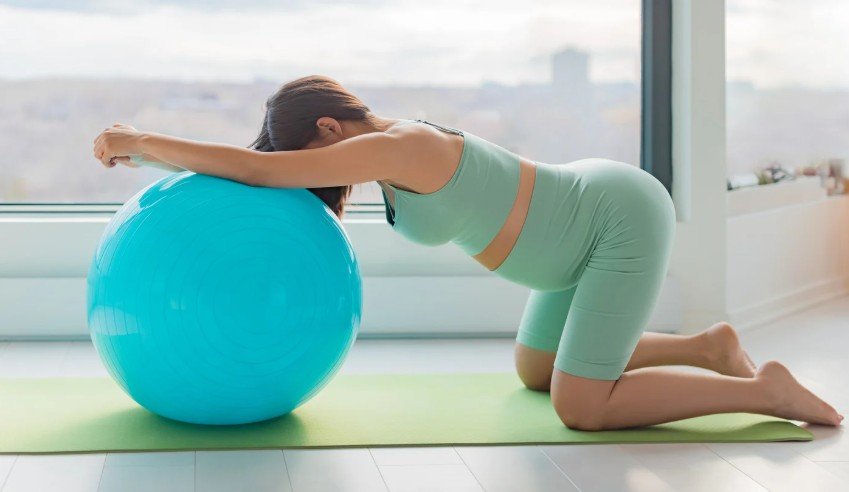
- Forward-Leaning Positions: Kneel on the floor with your upper body supported on the ball. This forward-leaning posture helps rotate a posterior baby (spine-to-spine) into the optimal position.
- Pelvic Tilts While Sitting: These gentle movements ease tension and allow for more efficient descent.
Using a birthing ball consistently during the last weeks of pregnancy creates a favorable environment for your baby to engage and settle into position.
Commonly Asked Questions about Exercise Ball to Induce Labor (FAQs)
What size birthing ball?
Choose a birthing ball sized by height: 55 cm (under 5’4″), 65 cm (5’4″–5’10”), or 75 cm (over 5’10”). Knees should bend 90° when seated.
Does bouncing on a ball induce labour?
Bouncing on a ball won’t directly induce labour, but it may help baby descend and ease discomfort. Combine with walking or other methods for potential progress. Consult your doctor.
How to go in labour fast?
To encourage labor naturally, try walking, nipple stimulation, or dates. Avoid unsafe methods—consult your doctor first. Rest and hydration also help prepare your body.
How to use a birth ball in pregnancy and delivery?
Using a birthing ball during pregnancy can ease discomfort and improve posture. For delivery, bounce or rock on the exercise ball and pregnancy and help with contractions effectively.
How long should I bounce on a birthing ball to induce labor?
Bounce 15-30 minutes daily on a birthing ball in late stage of pregnancy to encourage baby’s descent, but it won’t guarantee labor. Combine with walking for best results.
When to use the birth ball?
Use a birth ball during pregnancy for posture relief and in labor to relieve pain, encourage baby’s descent, and open the pelvis. Start in the third trimester for best results.
Do squats help induce labor?
Squats may help induce labor by encouraging baby’s descent and pelvic opening, but evidence is anecdotal. Safe in late pregnancy, but consult your doctor before labor and delivery exercises.
What are the best ways to induce childbirth and prepare for labor?
To induce childbirth, try walking, dates, or nipple stimulation. For labor prep, use a peanut ball to open the pelvis. Always consult your doctor first for safety.
How are moms recovering from vaginal and cesarean deliveries?
Vaginal delivery recovery focuses on pelvic rest and light movement, while C-section requires incision care and limited lifting. Bouncing on a birth ball aids postpartum healing but avoid post-surgery.
Are there any ways to use a birth ball in pregnancy and delivery?
Use a birth ball in pregnancy for comfort with ball positions like circles or gentle bounces. During labor, try leaning or rocking for pain relief and encourage baby’s descent.
Conclusion about EXERCISES TO INDUCE LABOR & DILATE
When the body is ready, natural methods like yoga ball moves to induce labor can be both effective and empowering. These movements support the body physically and mentally, enhance baby positioning, and may gently stimulate the start of labor without interventions.
By incorporating pelvic circles, bouncing, figure-eight hip rolls, supported squats, and pelvic floor exercises into your daily routine, you’re preparing your body in the best way possible. The yoga ball isn’t just a tool for birth—it’s a companion throughout the last trimester, labor, and even postpartum recovery.
Always remember to consult your healthcare provider before starting any labor-inducing techniques, and trust your body’s innate wisdom as you prepare to welcome your baby.
Recommended posts
- Is Heartburn a Sign of Labor and Delivery? Here’s the Truth
- How to Avoid Pooping During Labor? Here’s What Might Help
- 7 Best Exercises to Help Induce Labor Naturally and Safely
- How Long Does It Take for Sperm to Induce Labor (Explained)

