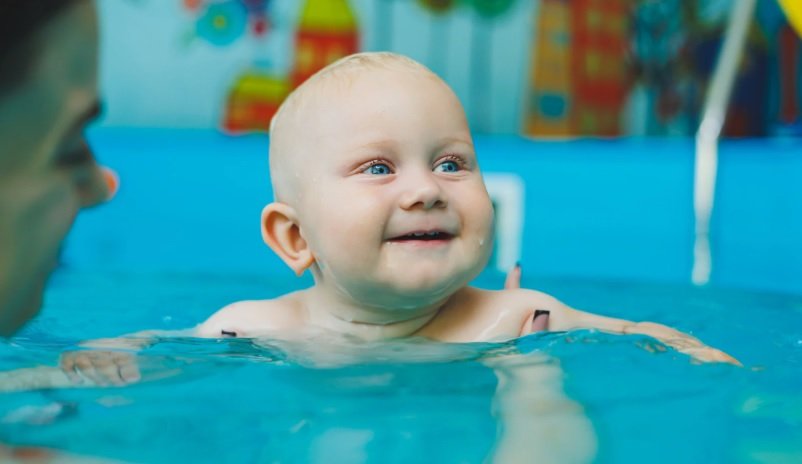
Have you ever wondered why infants giggle endlessly when they splash water or fill tiny cups during bath time? Water Play Activities for Infants aren’t just about fun — they’re a vital part of early development. Through simple, engaging water play, babies explore textures, sounds, and movement, strengthening both their senses and motor skills.
This article reveals how water play helps infants grow smarter, stronger, and happier. From sensory tubs and floating toys to gentle pouring games, we’ll explore safe and creative ways to make water play both educational and entertaining. You’ll also learn how these activities build early cognitive and social connections in your baby’s first year.
Dr. Mary Sheridan, a pioneer in child development studies, highlighted sensory play — including water play — as a foundation for early learning. So, ready to discover how to turn bath time into brain time? Let’s dive into the world of Water Play Activities for Infants and see the wonders they bring!
What Does Water Play Teach Infants?
Water play does much more than keep babies occupied on a hot day. At the infant stage, the experience of water—its temperature, texture, movement, and sounds—provides unique developmental opportunities. Here’s what water play teaches:
- Sensory Development
Water engages multiple senses simultaneously: touch (temperature, pressure), sight (ripples, reflections), sound (splashes, drips), and even proprioception (distinguishing body position in a fluid medium). These multisensory experiences support neural pathways that underlie later cognitive and motor skills. - Fine and Gross Motor Skills
Reaching for floating toys, grasping small containers, pouring water, and gentle splashing work both fine motor development (finger control, hand strength) and gross motor (arm, shoulder, torso movements). Infants discover how their bodies move in relation to water. - Cause-and-Effect Understanding
Babies will quickly learn, “If I splash, something moves,” or “If I tip the cup, water pours.” These early cause-and-effect interactions are foundational for later reasoning and science concepts. - Social and Emotional Bonding
Water play often happens in a shared space—bath time, a small tub on the patio, or a shallow basin. The caregiver’s presence, verbal interaction, encouragement, and shared joy foster bonding, trust, and secure attachment. - Language and Cognitive Growth
Narrating what’s happening (“Look, the water’s dripping!” “Splash goes the duck!”) introduces vocabulary. Counting drops, naming colors of cups, or noticing patterns in ripples helps early concept formation. - Confidence with Water
Gentle, playful water experiences from infancy can reduce fear of water later. Babies grow accustomed to water’s feel and dynamics in a safe, low-pressure environment.
By understanding these benefits, caregivers can intentionally design water play to maximize developmental gains while ensuring safety and enjoyment.
3 Easy At-Home Water Play Activities for Infants – Infant Water Play Ideas
Here are three simple, high-impact water play ideas you can try at home using everyday materials:
1. Floating Object Discovery Pool
Materials: Shallow basin or baby bathtub, plastic cups, small floating toys (rubber ducks, foam letters), measuring spoons.
How to Set Up: Fill the basin with a few inches (2–4 in / ~5–10 cm) of room-temperature water. Place floating toys and cups on the surface. Provide small containers/scoops for baby to dip, scoop, or swirl water.
What to Do: Sit with baby at the edge. Encourage them to touch, tap, and scoop water or push toys. You can say, “Let’s see which toy floats” or “Can you dip this spoon and pour?”
Developmental Focus: This activity stimulates visual tracking, hand-eye coordination, and early cause-effect thinking.
2. Sensory Pour Station
Materials: Two plastic containers or pitchers, water, food coloring (optional, mild), sponge or washcloth pieces.
How to Set Up: Place two containers side by side—one filled with water, the other empty. Add a drop or two of non-toxic food coloring to make the water more visually engaging (optional).
What to Do: Demonstrate pouring water from one container into the other. Give baby a small pitcher or cup to try (with supervision). Place sponge pieces to absorb and drip water.
Developmental Focus: Encourages grasping, bilateral coordination, and concentration. The visible flow of colored water also strengthens cause-effect understanding.
3. Bubble Splash and Drip
Materials: Baby-safe bubble solution or mild soap + water, shallow tray, spray bottle, small sieve or slotted spoon.
How to Set Up: Mix a mild bubble solution in a shallow tray. Fill a small spray bottle with clean water.
What to Do: Blow bubbles across the water surface, or spritz gentle mist. Let baby reach, pop bubbles, feel droplets. Use a sieve or slotted spoon to capture and drip bubbles back into water.
Developmental Focus: Fine motor timing (grasping to pop), sensory delight (bubbles’ lightness and texture), visual tracking, and cause-effect.
Safety Tips for Water Play with Infants:
- Always supervise infants closely—never leave unattended around water.
- Use shallow depth suitable for the infant’s age (just enough to cover hands, maybe forearms).
- Keep water warm (not cold) and avoid drafts.
- Use non-slip mats and ensure surrounding surfaces are secure.
- Limit play sessions to short bursts (5–10 minutes) to avoid overstimulation or chilling.
- Rinse skin gently and dry thoroughly afterward—moist skin can get irritated.
These three at-home setups require minimal additional gear but deliver high developmental value and joyful learning.
What Are the 5 Activities That Need Water?
If you’re wondering what you can do with water generally (beyond infants), here are five classic water-based play or learning activities (some adaptable into infant-safe versions). They demonstrate the versatile uses of water in early childhood and may inspire ideas as baby grows:
- Water Table Exploration
A dedicated shallow table structure fitted for sensory bins, pipes, funnels, water wheels, and more. Children can pour, splash, experiment, and construct water flows. - Water Painting / Water Drawing
Use a paintbrush dipped in water to “paint” on a concrete patio, wooden deck, or chalkboard. The water temporarily darkens surfaces before evaporating—great for mess-free play. - Sink-or-Float Experiments
Provide a tub of water and assorted materials (plastic, metal, sponge, cork) and have the child predict which items sink or float. Then test them. Excellent for early scientific reasoning. - Ice Play / Melt Experiments
Freeze small toys inside ice cubes or blocks. Let children use droppers or salt water to melt the ice and “rescue” the toys. Teaches patience, causality, and temperature concepts. - Water Sensory Bins with Add-ins
Fill a shallow bin with water and introduce themed add-ins—colored rice, sponges, floating puzzle pieces, squirting toys, or plastic animals. Kids can scoop, pour, sort, and explore textures.
You can adapt these five ideas as baby grows. For infants, simpler safe versions (floating toys, sponge bits) are ideal. As your child approaches toddlerhood, more complex water tables or sink/float games can be introduced. Always maintain age-appropriate safety measures.
How to Do Water Activities with Baby?
Executing safe, enriching water activities with your baby requires intention and mindfulness. Here’s a full guide:
1. Timing & Environment
- Choose a time when your baby is rested, fed, and in a good mood—avoid right after a big meal or when sleepy.
- Do activities in shaded, draft-free areas. Indoors or under a canopy works well.
- Limit duration to 5–10 minutes (you can always extend if baby is happily engaged).
2. Water Temperature & Depth
- Use lukewarm water (around body temperature, ~98–100°F / 37 °C). Test with your elbow or a thermometer.
- Keep depth shallow—no more than a few inches (or simply covering hands and forearms).
- Refill or warm the water if it cools during play.
3. Choose Safe, Engaging Tools
- Use BPA-free, non-toxic cups, scoops, spoons, and toys.
- Avoid breakable containers (glass or ceramic).
- Use lightweight implements babies can easily manipulate.
- Add gentle color (e.g. water-safe food coloring) or visual contrast, but avoid irritants or dyes.
4. Positioning & Support
- Hold infants securely (especially under arms or torso) if they cannot sit fully on their own.
- If baby sits independently, place them stable on a towel or soft mat with good support.
- Place toys within reach but not overwhelming in number.
5. Guide, Narrate, Encourage
- Talk through each action: “Now we pour,” “Let’s make the water drip,” “Splash!” This strengthens language and connection.
- Ask simple prompts: “Which toy is floating?” or “Can you tip the cup?” Offer gentle encouragement and let baby lead.
- Mirror their movements occasionally to show empathy and engagement.
6. Transition & Clean-Up
- After the activity, wrap baby in a soft towel promptly to keep warm.
- Gently pat dry and inspect for residual moisture in skin folds.
- Clean and dry all tools and tubs to prevent mold.
- Store everything ready for next use, making setup easier.
7. Monitor for Cues & Fatigue
- Watch for signs of overstimulation (fussiness, shivering, glazed eyes).
- If baby withdraws or wants to stop, end sooner. You can try again later or another day.
- Rotate in other sensory play types to avoid monotony.
By carefully planning each aspect—time, materials, posture, and interaction—you ensure that every water play moment becomes a safe, rich, and joyful learning experience.
More Baby Play Ideas for Toddlers and Babies
As infants grow into more mobile babies and toddlers, expanding the play repertoire keeps them engaged, curious, and developing. Here is a broader toolkit of play ideas—some water-based, others complementary—that you can use throughout early childhood:
Complementary (Non-Water) Play Ideas
- Textured Sensory Bins
Fill bins with rice, dried pasta, beans, sand, or kinetic sand (age-appropriate) and include scoops, spoons, and cups. Babies love exploring textures. - Finger Painting & Mess-Free Painting
Use edible finger paints or enclosed water-paint pads. Mess-free water doodle mats are especially good for early scribbling. - Pull-and-Push Toys
Toddlers love simple push carts or pull cords. These foster gross motor progression, balance, and coordination. - Stacking, Nesting & Sorting Toys
Blocks, stacking rings, nesting cups, or shape sorters help with spatial reasoning, fine motor, and problem-solving. - Musical Play & Rhythm Instruments
Shakers, drums, bells—anything that gives auditory feedback. Encourages rhythm, timing, and cause-effect.
Water-Based Expansions for Older Babies & Toddlers
- Water Table with Funnels, Pipes, and Gears
A modular table can host rich water explorations—routing flow, turning wheels, mixing, and experimentation. - Spray Bottles & Garden Misting
In a safe bathtub or outside, toddlers can enjoy taking turns spraying plants or surfaces with water. - Mini “Car Wash” for Toys or Bikes
Provide sponges and mild soap. Let toddlers wash toy cars, bikes, scooters, or playhouses. Great for motor control and imaginative play. - Pond or Stream Investigation (Outdoor Water Play)
Safely supervised, small natural bodies of slow-moving water can introduce stones, plants, and gentle wildlife (e.g. floating leaves, minnows). Always maintain strict safety. - Water Relay & Transfer Games
Use spoons, ladles, small buckets to transfer water from one container to another, racing against time or cooperating to fill one larger container. - Frozen Toy Ice Blocks
Freeze small toys in blocks of ice. Kids can use droppers, warm water, or salt to melt away the ice and reveal the toy.
Integrative Play Themes
- Color & Science Themes: Use colored water to explore mixing, color changes, and experimentation.
- Animal & Nature Themes: Floating toy animals, leaf boats, fish nets, lily pad play.
- Pretend Play & Storylines: “Boat voyages,” “fishing games,” “ocean voyages”—encourage narrative play.
- Language & Counting Game Tie-Ins: Count cups, name colors, talk about quantity and changes in level.
As your infant climbs toward toddlerhood, these evolving ideas maintain engagement, learning, and fun. Always supervise, adapt complexity to your child’s developmental level, and keep safety central.
Common Questions about Water Play Activities for Babies and Toddlers (FAQs)
How to properly let an infant play in water outside?
What are some fun water play activities for babies?
Fun water play activities for babies can include simple ideas like using measuring cups to pour water from one container to another. You can also fill a shallow container with a little bit of water and add rubber toys for your little one to explore. These activities are not only enjoyable but also promote sensory development.
How can I incorporate water play activities for toddlers at home?
Incorporating water play activities for toddlers at home can be easily achieved by setting up a small water station using plastic tubs or shallow bins. Fill them with a few inches of water and add toys, such as trucks or balls, to keep your kids engaged. You can also use items around the house like basters or paint brushes for added fun.
What are easy water play ideas for infants?
Easy water play ideas for infants include tummy time on a waterproof mat with a shallow pool of water nearby. You can place some ice cube trays filled with water in the sun to create ice blocks for your baby to touch and observe as they melt. This encourages sensory exploration and introduces the concept of cause and effect.
How do water play activities benefit my baby?
Water play activities benefit your baby in numerous ways. They help develop motor skills as your little one splashes around and manipulates various objects. Additionally, these activities can enhance cognitive skills by introducing concepts like volume and movement, as well as providing opportunities for social interaction when playing with other children.
Are there water play activities that can be done outside?
Yes, there are plenty of water play activities that can be done outside. Setting up a sprinkler or a small kiddie pool can be a great way to let your little one enjoy water play in the sun. You can also create a DIY water wall using plastic bottles to pour and splash, turning your backyard into a fun water play zone.
What items can I use for water play activities for babies?
For water play activities for babies, you can use a variety of household items such as measuring cups, plastic containers, and even kitchen utensils like ladles and basters. Items from the dollar tree, such as colorful plastic toys and water-safe mats, can also enhance the experience while being budget-friendly.
How can I encourage my toddler to love water play?
To encourage your toddler to love water play, you can make it a fun and interactive experience. Use colorful toys, add a little bit of water to their playtime, and create games where they can splash and explore. Show enthusiasm and join in on the fun to make water play an enjoyable activity that your toddler looks forward to.
What are some water play activities for babies and toddlers that promote learning?
Water play activities for babies and toddlers that promote learning can include games that involve measuring water with cups, exploring textures with different toys, and creating simple science experiments with ice cubes. These toddler activities not only engage your child’s senses but also help them understand basic concepts while having fun.
Can you make a foam shape stick to the board?
Yes! Wet foam shapes easily stick to smooth vertical surfaces like a plastic board or tile. The water creates a suction effect, making this a simple, engaging water play activity for infants to explore.
Conclusion
Infancy is a magical period of rapid growth, and Water Play Activities for Infants offers a uniquely potent way to nurture that growth while keeping things cool, fun, and engaging. Starting with simple splash-and-scoop setups, baby absorbs sensory, motor, and cognitive lessons that lay the foundation for deeper learning later on.
We explored three easy at-home water toddler activities you can try today, examined five broader water-based activity types, and walked through how to carry out water play safely and successfully with your baby. Then, extending beyond infancy, we introduced a gamut of baby and toddler play ideas—both water-related and complementary—so playtime evolves gracefully with your child.
In short: don’t wait for the perfect bath toy or fancy setup. You already have the tools around you—cups, tubs, sponges. What transforms simple water into a powerful learning moment is your presence, intention, and interaction. So go ahead, fill a basin, invite your baby’s curiosity, and watch discovery ripple forth.
Recommended posts
- 9 Fun Sensory Activities for One Year Olds to Boost Learning
- Common Down Syndrome Eyesight Challenges And Treatments
- Best Down Syndrome Physical Therapy Treatment Options
- Indoor physical activities for 6-12 year olds to Burn Energy
- 10 Easy Indoor Activities for Three Year Olds Toddler