

Autistic face vs normal face—does autism actually show in someone’s facial expressions or appearance? Some people wonder if autistic traits can be seen just by looking at someone. But is that really true, or just a myth?
There’s no “autistic face” in terms of physical features, but child with autism may show differences in facial expressions, eye contact, or emotional responses. Studies suggest that autistic people may use facial muscles differently or show less spontaneous expression, which can affect how their emotions are read by others. Dr. Catherine Lord, a leading autism expert, highlights that these differences come from neurological processing, not physical appearance.
Curious about how autism affects facial expression, social cues, and emotional communication? Let’s explore the science, real-life experiences, and expert insights that challenge stereotypes and bring clarity to this complex topic.
Why People With Autism Have Different Facial Features?
The differences in facial features between individuals with autism and those without can be attributed to several factors related to both the neurodevelopmental and physical aspects of autism.
Researchers suggest that individuals with autism may have distinct facial features due to differences in how the brain processes sensory input and emotional expressions. This can result in subtle or noticeable variances in muscle tone, eye contact, and emotional expression.
Autism impacts areas of the brain involved in facial recognition and social processing, often leading to difficulties in interpreting and displaying emotions through facial expressions.
This neurological basis means that people with autism may have less expressive faces, or they may appear “neutral” or “flat” in social situations, which can contribute to the misunderstanding that individuals with autism lack emotions.
However, the differences in facial expressions are not a sign of emotional detachment but rather a reflection of a different way of processing and expressing emotions.
Autistic Face Vs Normal Face: Understanding Expression Differences
The autistic face vs normal face comparison is often drawn in terms of the degree of emotional expression. A person with autism might show fewer facial movements or have difficulty coordinating facial muscles in ways that are considered typical in non-autistic individuals.
For instance, a neurotypical person may instinctively smile, raise their eyebrows, or change the tone of their voice to reflect happiness, surprise, or confusion, but individuals with autism may have a more limited or less noticeable range of facial expressions.
Facial expressions are a major part of nonverbal communication. However, autistic and neurotypical people often use and interpret facial expressions differently. These differences are not flaws—they reflect unique neurological processing styles.
✅ Comparison Table: Autistic vs Neurotypical Facial Expressions
| Aspect | Autistic Face | Neurotypical Face |
|---|---|---|
| Facial Expression | May appear flat, neutral, or muted even when feeling emotions | Typically expressive and emotionally matched |
| Emotional Display | Emotions may be expressed subtly, delayed, or in unexpected ways | Emotions are usually shown clearly and in real-time |
| Eye Contact | Often reduced, avoided, or uncomfortable | Regular, sustained eye contact during conversation |
| Muscle Movement | May show less movement in face; expressions can seem “frozen” | Active facial muscle use; dynamic expressions |
| Social Mimicry | May consciously imitate expressions to fit in (masking) | Expressions are generally automatic and unconscious |
| Response Timing | Delayed reactions; may take time to process and show feelings | Quick, socially timed facial responses |
| Perceived by Others | Often misunderstood as disinterested, cold, or unengaged | Generally perceived as warm, engaged, and emotionally present |
| Internal Emotion | Emotion is present, even if not clearly shown externally | Usually aligned with external expression |
| Communication Style | More literal or direct; facial cues may not match spoken words | Uses facial expressions to support tone, sarcasm, nuance |
🔍 Why These Differences Happen
- Neurological processing: Autistic brains often process emotions and social signals differently.
- Sensory sensitivities: Bright lights, noise, and facial expressions can be overwhelming.
- Motor coordination: Some may find it difficult to coordinate subtle facial movements.
- Masking: Autistic people may suppress natural expressions to avoid judgment or fit in socially.
💡 Key Takeaways
- “Different” doesn’t mean “less” — Autistic expression is valid, even if it looks different.
- Don’t assume based on facial expression alone; autistic people can feel deeply even if it’s not visible.
- Understanding goes both ways — Everyone benefits from learning each other’s communication styles.
What are Autistic Facial Expressions?
Autistic facial expressions are often distinct from those of neurotypical individuals. They may include reduced or minimal use of the mouth and wider eyes, which are the primary areas of the face used to express emotions.
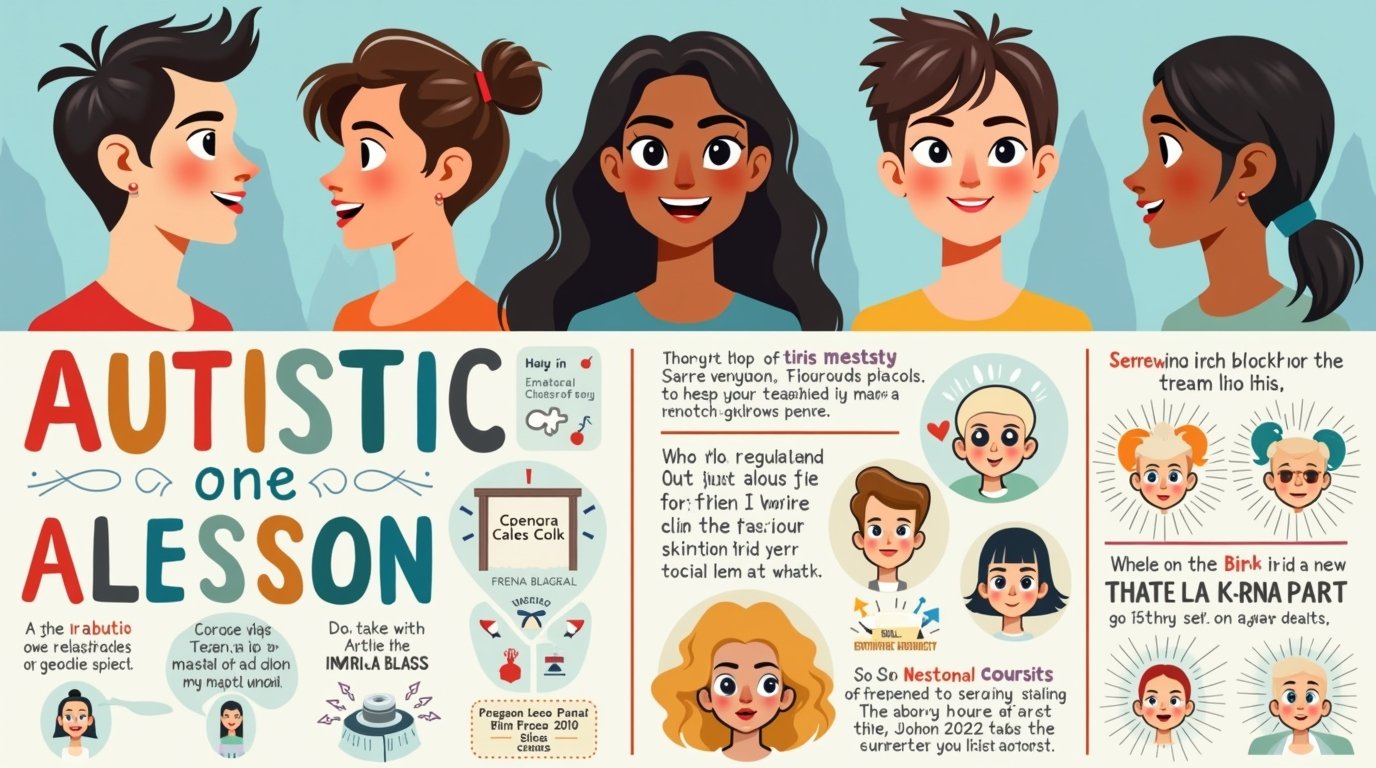
A common trait seen in people with autism is a lack of eye contact or limited facial movement, especially in social contexts. For example, a person with autism may not raise their eyebrows in response to surprise or may have a fixed gaze when interacting with others.
In contrast, a neurotypical individual might naturally employ a wide array of facial movements to communicate emotions. This can range from a subtle frown when confused to an open mouth when expressing joy.
People with autism, however, might have difficulty with these subtle cues, often requiring more explicit verbal communication or support to interpret and express feelings. Autistic facial expressions may be more “flat,” where emotions may not be as easily recognized through autism face features alone.
Physical Characteristics Of Autism
In addition to facial expressions, autism may exhibit various facial characteristics of children that can differ from those observed in individuals without autism. These physical traits are not universally present in every individual with autism, but some common patterns have emerged in scientific research.
One physical characteristic commonly associated with autism is a slightly altered muscle tone. Some individuals with autism may have hypotonia (low muscle tone), which can affect the muscles of the face, leading to a less pronounced or “flatter” facial appearance.
Additionally, individuals with autism may have unique body movements or posture, such as repetitive motions like hand-flapping or rocking, which can further differentiate their physical presence from that of neurotypical individuals.
Another important characteristic is the potential for differences in sensory processing. Many individuals with autism experience heightened or diminished sensitivity to sensory stimuli, such as touch, light, and sound.
This can influence their facial expressions in social interactions. For instance, someone with sensory sensitivities might avoid eye contact or have difficulty participating in social scenarios where there is a lot of noise or visual stimulation. These sensory processing differences further contribute to the distinction between the autistic children face and the normal face.
Distinct Facial Features in Autism
Autism Spectrum Disorder (ASD) does not have a specific set of distinct facial features that can be universally identified across all individuals. However, some studies suggest that there may be subtle differences in facial morphology and expression among individuals with autism. Here are some aspects that have been observed:
- Facial Symmetry: Some research indicates that individuals with autism may exhibit differences in facial symmetry compared to neurotypical peers.
- Eye Contact: People with autism may have less frequent eye contact, which can influence how their facial expressions are perceived.
- Facial Expressions: There may be differences in the range and intensity of facial expressions. Individuals with autism might have difficulty recognizing or expressing emotions through facial cues.
- Mouth and Jaw Structure: Some studies have noted variations in the structure of the mouth and jaw, although these differences are often subtle and not easily distinguished.
- Overall Facial Appearance: There is no single “look” associated with autism; individuals vary widely in appearance, and many may not exhibit any noticeable differences.
It’s important to understand that these characteristics can vary significantly among individuals with autism, and many factors contribute to facial features beyond neurodevelopmental conditions.
How Facial Features Can Help Diagnose Autism?
Facial features alone cannot definitively diagnose autism, but they can play a role in the diagnostic process when combined with behavioral, developmental, and sensory assessments. Researchers have use analyzing facial technology to study how individuals with autism express emotions differently from neurotypical individuals, providing further insight into the brain’s processing of emotions and social signals.
Facial expressions—or the lack thereof—can help professionals in early autism diagnosis, especially in the context of young children. While many children will develop typical social communication skills as they age, others may exhibit a persistent lack of facial expressions, eye contact, or difficulty with mimicking emotions.
These signs, when identified early, can prompt further investigation and potentially lead to earlier intervention. Early diagnosis and support are crucial in helping individuals with autism build necessary social and communication skills.
However, it’s important to note that autism is a spectrum, and each individual with autism is unique. The autism face features and expression patterns of one person with autism may differ greatly from another, making it essential to consider the full range of diagnostic criteria rather than relying solely on facial features for a diagnosis.
Commonly Asked Questions about Facial Features and Diagnosis of Autism (FAQs)
Are There More Masculine Features in Autism?
Research suggests that autistic individuals may display more masculine features, but these facial traits of autism vary widely. Gender presentation and characteristics are diverse among those on the autism spectrum.
Do Autistic Individuals Have Certain Facial Features?
Autistic individuals may exhibit subtle differences in facial features, but these are not definitive indicators of autism. Variations exist and are not exclusive to autism.
Does Face Shape Identify Autism?
Face shape alone cannot identify autism. While some studies suggest patterns, no specific face shape reliably indicates autism, as features vary greatly among individuals.
Are There Specific Facial Features of Autism?
There are no universally recognized facial features of autism. Some studies indicate minor variations, but these are not reliable for diagnosis or identification.
What are the distinct facial features associated with autism?
Individuals with ASD often exhibit distinct facial features that can vary widely. Common characteristics include a broader upper face and specific facial traits that may differ from neurotypical individuals. Research has shown that some children with autism spectrum disorder may have unique morphology, which can aid in the identification of autism.
How do facial features help in diagnosing autism?
Facial features can help diagnose autism by providing visual cues that are often associated with autism symptoms. Certain facial characteristics, such as a broad upper lip or specific facial expressions, can serve as indicators for healthcare professionals when assessing individuals for autism spectrum disorder.
Do people with autism have different facial expressions than neurotypical individuals?
Yes, individuals with autism may exhibit different facial expressions compared to neurotypical individuals. These differences can manifest in various ways, such as less frequent use of facial expressions or atypical expressions that may not align with social norms. Understanding these variations is crucial for recognizing and diagnosing autism.
What is the connection between facial features and autism symptoms?
The connection between facial features and severe autism symptoms lies in the physical characteristics that may accompany the behavioral symptoms of autism. Research has suggested that certain facial features, such as a broader upper face, can be markers that indicate the presence of autism, thereby assisting in the early identification of autism in children.
How do facial features in individuals with autism vary?
Facial features in individuals with autism can vary significantly based on several factors, including the form of autism spectrum disorder they exhibit. While some children with autism spectrum disorder may have distinct facial features, others may have more subtle indicators. This variety highlights the importance of a comprehensive understanding of the physical characteristics of autism for effective diagnosis and support.
What age does the autistic brain fully develop?
The autistic brain development timeline varies, but studies suggest structural differences stabilize by early adulthood (around 25). However, learning and adaptation continue throughout life with proper support.
Facial Features of Autism Conclusion
In conclusion, the autistic face vs normal face debate is one that reveals deeper insights into how autism influences both appearance and emotional expression. The differences in facial features and expressions are not merely physical—they also highlight the distinct neurological and developmental pathways that individuals with autism experience. From the reduced use of facial muscles in expressing emotions to the variations in physical characteristics, individuals with autism exhibit a unique way of processing and conveying their internal states.
Understanding these differences is key to building empathy and improving communication between individuals with autism and the broader society. Recognizing that facial expressions may not fully represent the emotions or thoughts of a person with autism can lead to more supportive, inclusive interactions. In the end, while autism face features can offer some insight into autism, it’s the broader understanding of the condition that will foster more acceptance and accurate recognition of individual needs.
Recommended posts
- 10 Autistic Burnout Symptoms You Shouldn’t Ignore
- Autism and Narcissism Key Differences in Behavior & Emotions
- Asperger Traits Checklist: Common Signs in Children & Adults
- Can Autism Go Away with Age? What the Research Tells Us

