
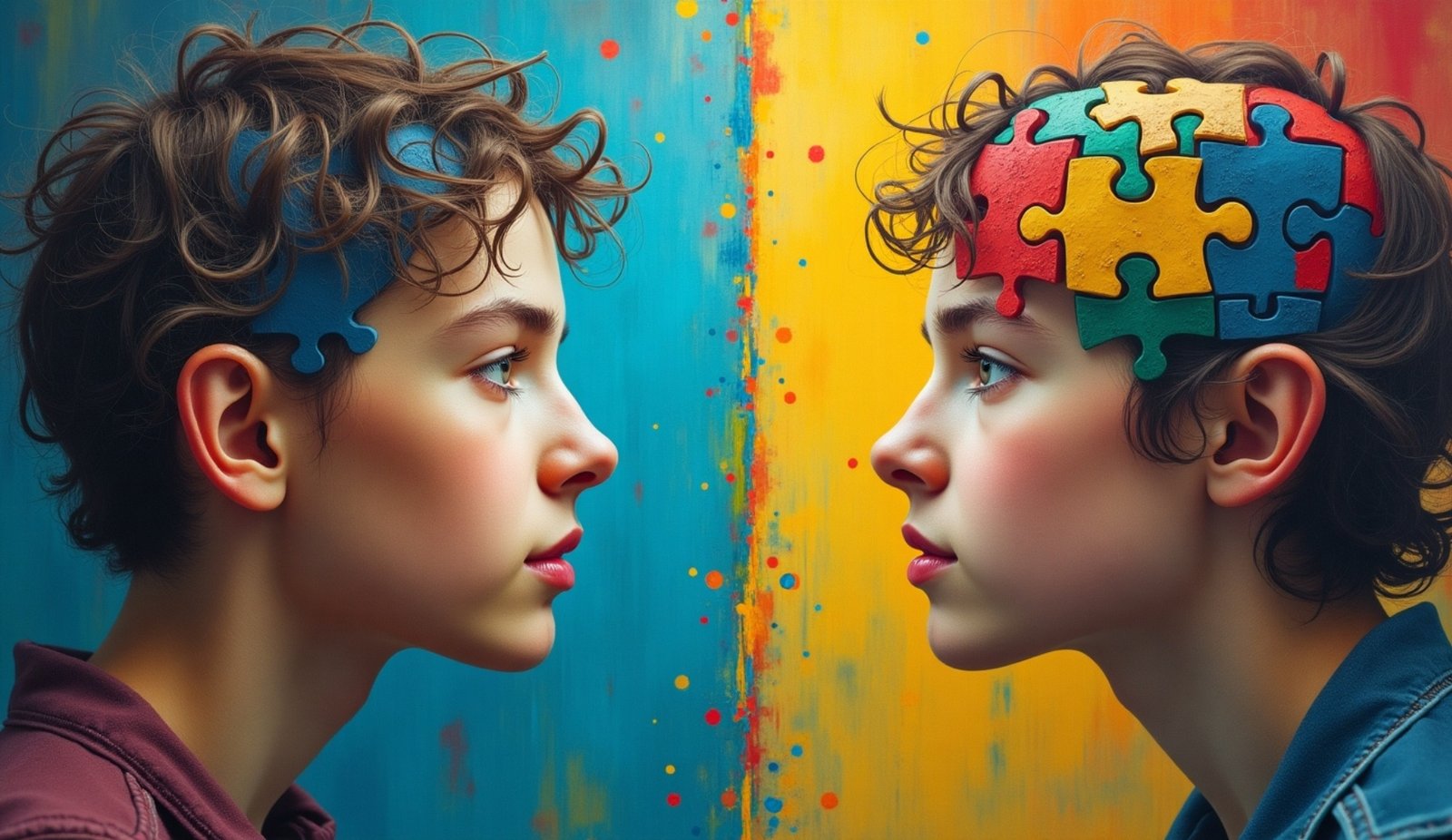
OCD vs autism—how often do we hear these terms used interchangeably? But are they really the same, or just misunderstood conditions with overlapping traits? Have you ever wondered how to tell them apart? Let’s dive into the real differences between Obsessive-Compulsive Disorder (OCD) and Autism Spectrum Disorder (ASD).
Obsessive Compulsive Disorder OCD is a mental health condition marked by intrusive thoughts and repetitive behaviors. Autism, on the other hand, is a neurodevelopmental disorder that affects social communication, interaction, and behavior. While both can involve routines or fixations, their causes, symptoms, and treatments are entirely different.
Experts like Dr. Temple Grandin and Dr. Jeffrey Schwartz have explained these conditions in detail, helping people understand the unique challenges each one presents. So, if you’re ready to separate myth from fact, let’s uncover the key distinctions between OCD and autism right now.
Is It OCD or Autism?
Determining whether someone has OCD or Autism—or both—can be challenging due to overlapping symptoms. However, the root causes and intentions behind the behaviors are often quite different.
OCD is an anxiety disorder characterized by intrusive thoughts (obsessions) and compulsive behaviors aimed at reducing the anxiety caused by these obsessions. These compulsions are not enjoyable and are often distressing. For example, young people with OCD might wash their hands repeatedly to prevent a feared illness, even though they logically know the fear is irrational.
Autism, on the other hand, is a neurodevelopmental condition that affects how individuals perceive and interact with the world. Autistic individuals often engage in repetitive behaviors or develop special interests, but these actions are generally comforting or enjoyable, not distressing.
Understanding the motivation behind a behavior is key. Is the behavior performed out of anxiety to neutralize a perceived threat (OCD)? Or is it done for pleasure, sensory input, or a desire for routine (Autism)?
Co-Occurrence of OCD and Autism
It is entirely possible—and not uncommon—for individuals to be diagnosed with both Autism and OCD. Research shows that up to 17% of autistic individuals also meet criteria for OCD, compared to 1-3% in the general population. This dual diagnosis can complicate treatment and diagnosis of OCD.
Here’s why co-occurrence matters:
- Misdiagnosis: An autistic person may be misdiagnosed with OCD when, in reality, their behavior stems from sensory needs or a desire for routine.
- Treatment Implications: Standard OCD treatments, such as Cognitive Behavioral Therapy (CBT) with Exposure and Response Prevention (ERP), may need to be adapted for autistic individuals. Similarly, Autism interventions must consider co-occurring OCD symptoms.
- Functionality Impact: When both conditions are present, repetitive thoughts and behaviors may be more intense, rigid, and disruptive.
Understanding co-occurrence ensures that each condition is addressed appropriately, leading to better outcomes.
OCD vs Autism Key Differences in Behavior, Thoughts, and Diagnosis
To effectively differentiate OCD and Autism, it’s essential to compare them across key areas:
| Category | OCD | Autism |
|---|---|---|
| Cause of Behavior | Driven by anxiety and distress from intrusive thoughts | Driven by sensory needs, comfort, or interest |
| Repetitive Actions | Performed to reduce anxiety or prevent a feared event | Enjoyable, often tied to routine or self-regulation |
| Awareness | Individuals often know their obsessions/compulsions are irrational | Individuals may not perceive their behaviors as problematic |
| Emotional Experience | Distressing and unwanted | Comforting or neutral |
| Diagnosis | Diagnosed by a psychologist or psychiatrist using DSM-5 criteria for OCD | Diagnosed via developmental assessments and observations using tools like ADOS-2 or ADI-R |
| Onset | Typically appears in late childhood or adolescence | Symptoms usually present by age 2-3 |
| Social Challenges | May be present, but not core to the disorder | Core feature of the diagnosis, including difficulty with communication and social cues |
A clinician will often need to spend considerable time evaluating not just the behavior, but the emotional and cognitive underpinnings behind it.
What are the Overlapping Symptoms Between ADHD, Autism, and OCD?
When comparing ADHD, Autism, and OCD, it’s common to see overlapping symptoms such as:
- Inattention or hyperfocus
- Repetitive behaviors
- Impulsivity
- Difficulty with transitions
- Sensory sensitivities
However, the function and source of these symptoms differ. For example:
- A child with ADHD may seem inattentive due to difficulty regulating focus.
- An autistic child may appear inattentive because they’re hyperfocused on a special interest.
- A child with OCD might seem distracted because they are preoccupied with obsessive thoughts.
Additionally, the intensity and distress associated with OCD obsessions can be absent in Autism or ADHD.
Here’s a quick breakdown:
| Symptom | ADHD | Autism | OCD |
|---|---|---|---|
| Inattention | Yes (core feature) | Sometimes (due to focus on interests) | Sometimes (due to intrusive thoughts) |
| Impulsivity | Yes | Occasionally | Rarely |
| Repetitive Behavior | Occasionally (stimming) | Frequently (stimming, routines) | Frequently (compulsions) |
| Distress Over Routine Disruption | Sometimes | Yes | Yes |
| Obsessions | No | No | Yes (core feature) |
Because these symptoms are nuanced, comprehensive assessments are critical for accurate diagnosis and treatment.
Insight from Autistic People
Autistic individuals have increasingly voiced the importance of being understood on their own terms, particularly when discussing co-occurring conditions like OCD. Many point out that:
- Their repetitive behaviors are often self-soothing, not anxiety-driven.
- They may be misunderstood or pathologized unnecessarily.
- Masking behaviors to appear “normal” can lead to heightened anxiety, mimicking OCD symptoms.
For example, a person might repeatedly check the time not due to OCD-driven fear, but due to a fixation on punctuality or structure—a trait common in Autism.
Moreover, autistic voices challenge traditional therapy models, arguing that interventions should prioritize understanding neurodiversity, rather than forcing individuals to “fit in” or suppress their nature.
Listening to autistic people, especially those with co-occurring OCD, can provide clinicians and caregivers critical context to deliver more compassionate and effective care.
The Role of ABA Therapy in Treating Autism and OCD
Applied Behavior Analysis (ABA) is a widely used therapy for Autism, and some of its principles have been adapted to address OCD-related behaviors.
For Autism:
- ABA focuses on reinforcing desired behaviors and reducing maladaptive ones.
- It may help autistic individuals learn daily living skills, social interaction, and communication.
For OCD:
- ABA isn’t typically used to treat OCD directly, but behavioral interventions share similarities with Exposure and Response Prevention (ERP).
- ERP encourages individuals to confront feared thoughts without engaging in compulsions—a concept that aligns with behavior modification principles.
Concerns and Considerations:
Many autistic self-advocates critique traditional ABA, arguing that it can be overly rigid and focused on compliance over autonomy.
In cases of co-occurring OCD and Autism, therapy must be tailored:
- Respecting autistic identity
- Addressing OCD-specific distress
- Encouraging coping strategies that align with individual values
Modern approaches now blend compassionate ABA with cognitive and sensory supports, making treatment more holistic and less confrontational.
Commonly Asked Questions about Autism vs OCD (FAQs)
What is the difference between OCD and autism?
OCD, or Obsessive-Compulsive Disorder, is characterized by obsessive thoughts and compulsive behaviors, while autism, specifically Autism Spectrum Disorder (ASD), is a developmental disorder that affects communication and behavior. Individuals diagnosed with OCD may experience anxiety driven by their obsessions, whereas autistic individuals often have difficulties with social skills, repetitive behaviors, and specific interests.
What are the symptoms of OCD in autistic individuals?
Symptoms of OCD may manifest in autistic individuals as intense obsessions and compulsions that are similar to those in people without autism. These might include repetitive washing, checking, or organizing behaviors. However, the way OCD symptoms present in autistic individuals can sometimes overlap with their characteristic behaviors, making identification challenging.
Can autism and OCD co-occur?
Yes, research indicates that there is a notable co-occurrence of OCD and autism. Autistic individuals, particularly children and adolescents, may also be diagnosed with OCD, leading to a complex interplay of symptoms that can complicate treatment and management strategies.
How is OCD treated in individuals with autism?
Treating OCD in individuals with autism often involves a combination of cognitive-behavioral therapy (CBT) and medication. Therapy for obsessive-compulsive disorder may be tailored to address the unique needs of autistic individuals, focusing on reducing anxiety and managing compulsive behaviors effectively.
What are the common obsessions and compulsions in OCD?
Common obsessions in OCD include fears of contamination, harm, or losing control, while compulsions might involve repetitive checking, cleaning, or counting. In individuals with autism, these obsessions and compulsions might be influenced by their specific interests or routines, making it essential to consider their developmental context.
How does the overlap of autism and OCD affect treatment outcomes?
The overlap of autism and OCD can lead to unique treatment challenges. Outcomes of cognitive behavior therapy may vary, and it might require adjustments to address both disorders simultaneously. Understanding the co-occurrence of these conditions is crucial for developing effective interventions tailored to the individual’s needs.
Are there specific therapies for treating autism and OCD?
While there is no one-size-fits-all therapy, approaches such as exposure and response prevention (ERP) can be effective for OCD. Additionally, therapies that focus on enhancing social skills and communication can be beneficial for treating autism. Combining these approaches may yield better outcomes for individuals with co-occurring disorders.
What does research say about the prevalence of OCD in autistic individuals?
Research indicates that OCD symptoms might be more prevalent in autistic individuals compared to those without autism spectrum disorders. Studies suggest that as many as 17-30% of autistic children and adults may also have OCD, highlighting the importance of recognizing and addressing this co-occurrence in clinical settings.
How can parents identify OCD in children with autism?
Identifying OCD in young people can be challenging due to overlapping behaviors. Parents should look for signs of distress related to specific obsessions or compulsions that interfere with daily functioning, such as excessive handwashing or repetitive questioning. Consulting with a mental health professional can aid in accurate diagnosis and treatment planning.
Co-Occurring Autism and OCD Conclusion
When exploring the relationship between OCD and autism, it is essential to understand the similarities and differences between these two conditions. Individuals with autism spectrum disorder (ASD) may exhibit repetitive behaviors in autism that can resemble the compulsions seen in obsessive-compulsive disorder (OCD). A child with autism may also have OCD, resulting in a co-occurrence features of autism and obsessive-compulsive disorder. This overlap can complicate the diagnostic process, as both disorders are characterized by intrusive thoughts and compulsive actions.
People with autism spectrum disorders may experience OCD symptoms that are distinct yet can be confused with their autistic features. Treatment for OCD in autistic individuals often requires tailored approaches, such as adapted cognitive behavior therapy, to effectively address the compulsive behaviors and obsessions associated with both conditions. Understanding the full diagnostic criteria for autism is crucial for accurately diagnosing and supporting individuals with co-occurring autism spectrum disorder and OCD.
Recommended posts
- 5 Surprising Signs of Autism During Pregnancy (Must-Read)
- Social Anxiety Vs Autism: Spotting The Key Differences
- Identifying Autism and Pathological Demand Avoidance (PDA)
- Autism Hyperfixation: The Superpower You Didn’t Know About
- How to Prevent Autism While Pregnant (Safely & Naturally)

