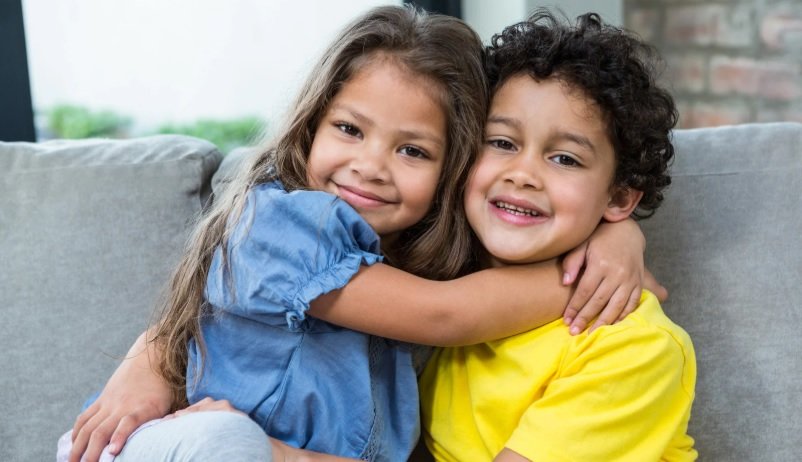
A brother sister relation holds a unique place in every family, filled with love, rivalry, protection, and lifelong bonding. From childhood fights to silent understanding, this relationship between a brother and a sister evolves with time. Have you ever noticed how a brother and sister can argue endlessly yet stand united when it truly matters?
A brother often plays the role of a protector and guide, while a sister brings emotional strength and care into the bond. Studies on family psychology show that younger siblings strongly influence each other’s confidence, social skills, and emotional resilience. This mutual impact helps shape values that last a lifetime.
But this brother sister relationship goes far beyond shared memories and playful teasing. Psychologist Dr. Laura Markham highlights that strong sibling bonds create emotional security well into adulthood. So let’s explore what truly defines a brother-sister relation and why it remains one of the most meaningful connections in life—don’t you think it deserves that attention?
What Is a Brother-Sister Relationship?
A brother-sister relationship is a familial bond between siblings of different genders, characterized by a multifaceted dynamic that evolves throughout life. It is not a monolithic experience but a living connection defined by shared ancestry, upbringing, and a deep, often unspoken, understanding.
At its core, this relationship is a primary training ground for social interaction. It is where individuals first learn to negotiate, share, compete, and empathize with someone outside the parent-child dyad. A brother or sister often serve as each other’s first friend, first rival, and first confidant. This bond is built on a shared history—knowledge of family rituals, childhood homes, and parental nuances that no one else can fully comprehend.
The relationship’s essence lies in its duality. It can simultaneously be protective and challenging, supportive and competitive. A brother may act as a fierce protector of his sister, while also being her primary tormentor during childhood. A sister may be her brother’s most honest critic and his staunchest defender.
This blend creates a resilient bond that, while often tested, is difficult to sever. It is a connection that teaches profound life lessons about gender dynamics, loyalty, forgiveness, and the enduring nature of family, regardless of physical or emotional distance.
Brother and Sister Relationship Psychology:
The brother and sister relationship is one of the closest and most influential relationships in a person’s life. From a psychological perspective, this relationship can significantly impact personality development, emotional intelligence, social behavior, and even future romantic relationships.
Here’s an overview of the psychology behind brother-sister relationships:
🧠 Psychological Aspects of Brother-Sister Relationships
1. Attachment and Emotional Support
- Siblings often serve as early attachment figures.
- A caring brother or sister can provide emotional stability, especially in times of familial stress.
- Strong sibling bonds can act as a buffer against anxiety, loneliness, and depression.
2. Gender Socialization
- Brothers and sisters often learn about gender roles through their interactions.
- A brother may learn empathy or nurturing behaviors from his sister, while a sister may develop assertiveness through interactions with her brother.
- These dynamics can influence how individuals relate to the opposite gender in adulthood.
3. Conflict and Resolution
- Sibling rivalry is normal but can teach important skills:
- Negotiation
- Perspective-taking
- Managing emotions
- Brothers and sisters who learn to resolve conflicts early tend to have better social problem-solving skills.
4. Birth Order and Role Expectations
- Older siblings (regardless of gender) often take on a caretaker or mentor role.
- Younger siblings may look up to their older brother or sister as a role model.
- Gender can influence expectations — for example, older brothers may be expected to be protectors, while older sisters may be expected to nurture.
5. Psychological Impact of Favoritism
- Parental favoritism (real or perceived) can strain sibling relationships.
- If a brother or sister feels less valued, it can lead to resentment, low self-esteem, and long-term emotional issues.
6. Development of Empathy and Cooperation
- Growing up with a sibling of the opposite sex can foster:
- Greater empathy
- Better communication skills
- Increased tolerance for differing perspectives
7. Lifelong Influence
- Sibling relationships often outlast friendships and sometimes even parental relationships.
- They provide continuity and shared history.
- In adulthood, they can become sources of support, especially during life transitions (e.g., losing parents, raising families).
💬 Common Dynamics in Brother-Sister Relationships
| Type of Interaction | Psychological Effect |
|---|---|
| Protective Brother | Builds a sense of safety, can lead to over-dependence if extreme |
| Supportive Sister | Encourages emotional expression, especially in boys |
| Teasing and Rivalry | Normal in moderation; excessive teasing may impact self-esteem |
| Collaboration | Enhances teamwork, planning, and shared responsibility |
🛠 Tips for Healthy Brother-Sister Relationships
- Encourage open communication.
- Avoid comparing siblings.
- Respect individuality.
- Model conflict resolution.
- Celebrate each other’s successes.
📚 Theoretical Perspectives
1. Social Learning Theory (Bandura):
- Brothers and sisters learn behaviors by observing and imitating each other.
2. Attachment Theory (Bowlby/Ainsworth):
- The quality of sibling bonds can mirror or compensate for parent-child attachment styles.
3. Family Systems Theory:
- Sibling relationships are part of the broader family dynamic and influence family roles.
Who Is Nanad in a Relationship?
In the context of South Asian family structures, particularly within India, Pakistan, Bangladesh, and Nepal, the term Nanad holds significant cultural and relational weight. A Nanad is specifically the sister of one’s husband. In other words, from a wife’s perspective, her Nanad is her husband’s sister.
Understanding this relationship is crucial to comprehending the extended family dynamics in many cultures. The Nanad-Bhabhi (sister-in-law) relationship is often considered one of the most pivotal and sometimes sensitive bonds within a joint or extended family system. The Nanad can play multiple roles:
- A Bridge: She can act as a crucial link between her brother (the husband) and his new wife, helping the new bride navigate the unfamiliar family customs and dynamics.
- A Confidante: In many cases, a Nanad becomes a trusted friend and advisor to her sister-in-law, offering support from within the family.
- A Guardian: Traditionally, a Nanad might also see herself as a guardian of her brother’s interests and the family’s values, which can sometimes lead to conflict if boundaries are not clearly communicated.
The modern interpretation of this relationship is evolving. While traditional roles may still influence expectations, many Nanad and Bhabhi relationships today are built on mutual respect, friendship, and individuality, much like any other strong brother sister relation extended through marriage. The dynamic underscores how sibling bonds directly influence and extend into new familial alliances.
How to Prove a Brother and Sister Relationship?
The need to legally or officially prove a brother-sister relationship arises in various scenarios, such as immigration applications, inheritance claims, insurance beneficiary designations, or in cases of lost documentation. Proof is established through a combination of legal documents and, in some cases, supplementary evidence.
Here are the primary methods and documents used to prove this familial bond:
- Birth Certificates: This is the most direct and authoritative proof. The birth certificates of both individuals must list at least one common biological parent (shared mother and/or father). This provides incontrovertible evidence of a sibling relationship.
- Affidavits of Relationship: Sworn statements (affidavits) from one or both siblings, and often from parents or other older relatives, can be submitted. These must be notarized and explicitly state the nature of the brother sister relationship, full names, dates of birth, and parents’ names.
- Parental Birth Certificates or Marriage Certificates: In cases where siblings share only one parent, or if one sibling’s birth certificate is missing, documentation proving the parent’s identity (like their birth certificate) and their marriage certificate (if applicable) can help establish the link.
- Census or Family Registry Records: Official government records that historically list family members living in one household can serve as strong supporting evidence. Many countries maintain detailed family registers.
- DNA Testing: When documentary evidence is unavailable or insufficient, a legal sibling DNA test can provide scientific proof. While not as conclusive as a parent-child test, a full sibling DNA test can determine with a very high degree of probability whether two individuals share both biological parents.
- Supplementary Evidence: Photographs spanning childhood to adulthood, family letters, medical records, or sworn statements from longstanding community members can support an application, especially when combined with primary documents.
It is always advisable to consult with a legal expert or the specific institution (e.g., embassy, court) to understand their exact requirements for proving a brother sister relation.
What Are the Five Types of Sibling Relationships?
Developmental psychologists and family studies experts have categorized sibling relationships into several types. These types are not always static and can change over time due to life events, maturity, and effort. Here are five common types of sibling relationships, which apply directly to the brother sister relation:
- The Caring/Supportive Relationship: This is the ideal often portrayed in media. Siblings in this category are close, affectionate, and deeply supportive. They communicate openly, confide in each other regularly, and actively participate in each other’s lives without excessive rivalry. Their bond is characterized by mutual respect, pride in each other’s achievements, and a reliable safety net in times of crisis.
- The Rivalrous/Conflict-Driven Relationship: Marked by persistent competition, jealousy, and conflict, this type focuses on measuring against one another. The rivalry can be for parental attention, academic success, or life achievements. While it can be draining, it can also drive both siblings to excel. With maturity, the acute rivalry often mellows, but the underlying competitive streak may remain.
- The Ambivalent/Intermingled Relationship: The most common type, this relationship is a complex mixture of positive and negative feelings. One week, the siblings are best friends; the next, they are in a heated argument. Their interactions are a rollercoaster of support and antagonism. The bond is strong and lasting precisely because of its intensity and deep-rooted history, even if it’s not consistently harmonious.
- The Hostile/Antagonistic Relationship: This is a persistently negative bond characterized by resentment, dislike, and minimal contact. Conflicts from childhood may have solidified into enduring animosity. Interactions are stressful and avoidant. In such cases, the brother sister relation may exist in name only, with emotional and physical distance maintained to avoid friction.
- The Casual/Uninvolved Relationship: Siblings in this category are emotionally distant and lead largely separate lives. There is no major hostility, but also no deep connection. Their relationship is defined by indifference. Contact is typically limited to major family events or obligations, and they have little influence on each other’s daily lives or emotional well-being.
Understanding these types helps normalize the vast spectrum of sibling experiences, emphasizing that there is no single “correct” way for a brother sister relation to manifest.
Commonly Asked Questions about Sibling Brother Sister Relation (FAQs)
How does growing up with brothers affect a girl?
Growing up with a brother can foster resilience, assertiveness, and adaptability in girls. They often learn to navigate competition and develop strong communication skills. This dynamic can shape their relationships, making them more confident and capable of handling challenges compared to those who grow up with a sister.
How does sibling rivalry affect a brother sister relation?
Sibling rivalry can strain the brother sister relation, creating jealousy, competition, and disagreements during adolescence and beyond. A psychologist recommends clear boundaries, fair attention, conflict resolution skills, empathy development, and encouragement of different interests to reduce resentment and foster closeness as siblings grow older together.
Can age difference influence how a brother and sister get along?
Age gap influences dynamics: an older sister may role model and caregiver while a younger brother becomes companion and playmate. A psychologist suggests respecting stages, promoting fairness, nurturing unconditional support, encouraging different interests, and offering shared activities so siblings can get along despite age differences.
What if a brother and I get along less as we get older?
Closeness changes as siblings get older because careers, relationships, and different interests shift time and attention. A psychologist recommends open communication, scheduled contact, empathy practice, addressing disagreements, and planning shared experiences to rebuild companionship so the brother and I get along and stay incredibly close.
How can parents help raise healthy brother sister relation?
Parents can raise a healthy brother sister relation by modeling fairness, giving love and attention to each child, avoiding comparisons, and encouraging older one to be supportive. A psychologist advises fostering empathy, shared play, conflict resolution skills, and rewarding cooperation so siblings become compassionate companions.
Are twins more likely to be really close or to annoy each other?
Twins experience unique closeness and competition: being the same age can create intense companionship but also heightened sibling rivalry if personalities differ. A psychologist recommends respecting individuality, offering personal space, encouraging separate interests, and teaching conflict resolution so twins balance closeness with healthy boundaries effectively.
How do different personalities shape a brother sister relation?
Different personalities can challenge and enrich a brother sister relation: one sibling may be compassionate while another prefers independence, causing misunderstandings. A psychologist suggests valuing differences, practicing empathy, assigning cooperative tasks, avoiding comparisons, and teaching conflict resolution so siblings learn, adapt, and maintain closeness together.
What strategies help resolve conflicts between older brother and younger sister?
Older brother and younger sister conflicts arise from power imbalances, teasing, or fairness concerns. A psychologist recommends discussions, active listening, fairness checks, setting boundaries, teaching younger one communication skills, using time-outs during escalation, role reversal exercises, and guided conflict resolution to restore empathy and closeness.
What if siblings don’t stay in touch and have lost touch?
If siblings don’t stay in touch or have lost touch, regret and distance often follow. A psychologist recommends initiating low-pressure contact, acknowledging past disagreements, offering empathy, proposing shared activities, setting realistic expectations, and rebuilding trust so relationship with their siblings can mend and develop closeness.
Conclusion
The brother sister relation is an intricate, living narrative that runs as a constant thread through the story of a lifetime. It is a unique blend of chosen friendship and unchosen family, of shared history and individual paths. This bond, in all its forms—from the deeply supportive to the challengingly rivalrous—serves as a critical mirror, a personal historian, and a foundational influence on who we become.
It teaches us that love is not the absence of conflict, but the ability to navigate it with someone who shares your origin story. Whether filled with constant laughter, navigated through occasional conflict, or sustained by silent understanding, this brother sister relationship remains a powerful and irreplaceable cornerstone of the human experience, forever evolving yet indelibly marked by the first home we ever knew—each other.
Recommended posts
- The 5 Types of Sibling Relationships Psychology Every Family Experience
- Brother and Sister Love: What It Feels Like and Why It Lasts a Lifetime
- The Sibling Connection Signs, Psychology, and examples
- Romantic Relationship Between Siblings Risks & Consequences
- 100+ Heartwarming Bond of a Brother and Sister Quotes