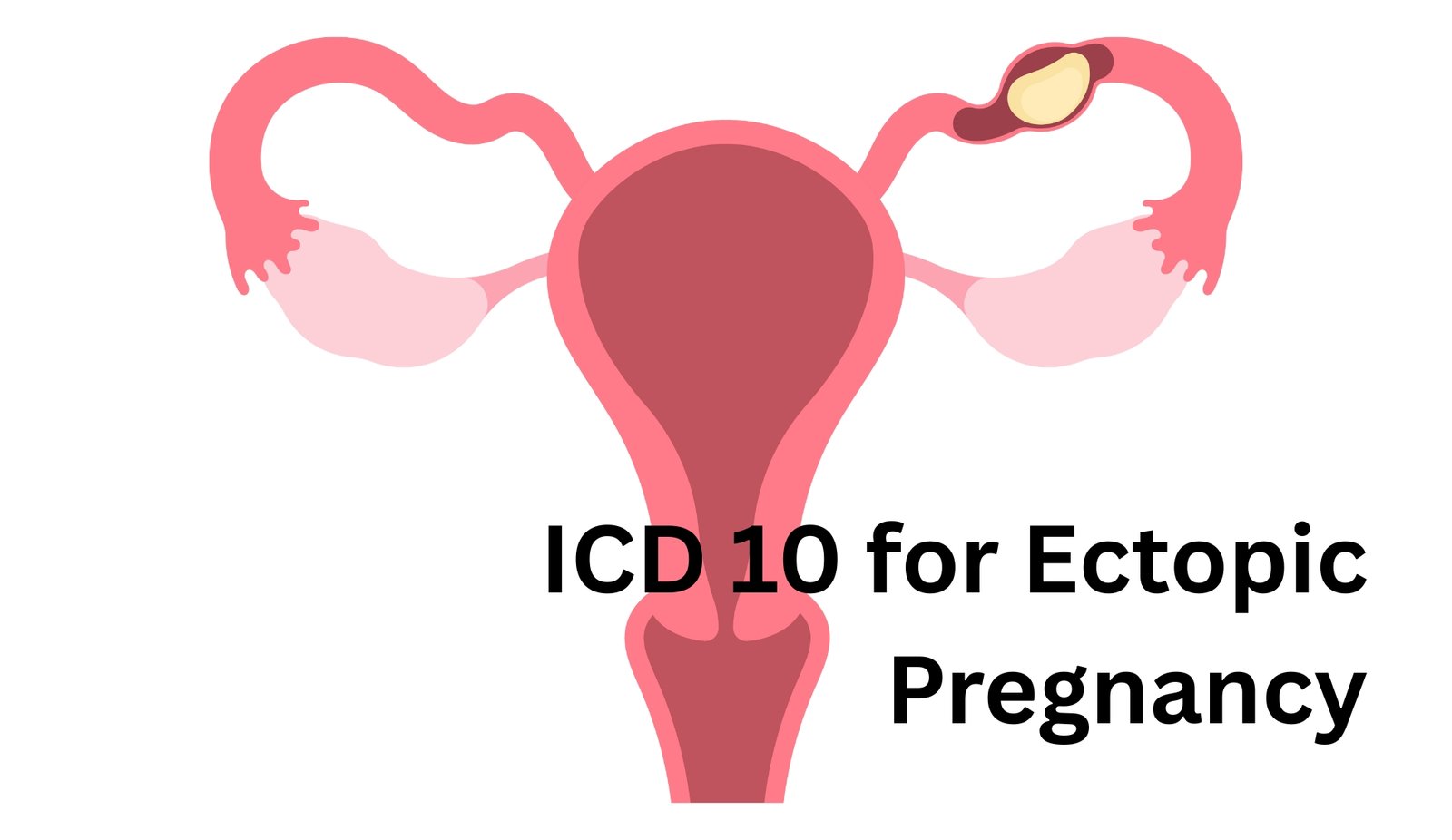
Have you ever wondered what the ICD 10 for Ectopic Pregnancy is and why it matters in medical records? An ectopic pregnancy is a serious condition where the fertilized egg implants outside the uterus, often in the fallopian tube. Doctors and healthcare systems worldwide use ICD-10 codes to classify and track such diagnoses. But which exact code applies to ectopic pregnancy in ICD-10?
The ICD-10 code for ectopic pregnancy is O00. Under this, subcategories specify different types such as tubal, ovarian, abdominal, and others. This article breaks down these codes clearly, explains their medical significance, and shows how professionals like the World Health Organization (WHO) guide their usage.
But ICD-10 isn’t just about codes—it’s about accuracy, research, and patient safety. Dr. John S. Witte, a renowned expert in reproductive medicine, emphasizes the importance of precise coding for effective treatment and reporting.
So, let’s explore the detailed 2019 2020 2021 2022 classification of ectopic pregnancy in ICD-10 and understand how it shapes global healthcare practices.
What is the ICD 10 for Ectopic Pregnancy?
The ICD 10 for Ectopic Pregnancy refers to a group of diagnostic codes used by healthcare providers, insurance companies, and researchers to classify and document cases where a fertilized egg implants outside of the uterus.
Most often, ectopic pregnancies occur in the fallopian tubes, though they may also occur in the cervix, ovaries, or abdominal cavity. Because ectopic pregnancy is a potentially life-threatening condition that requires immediate medical attention, proper coding is not just an administrative requirement—it plays a crucial role in ensuring accurate patient care, insurance reimbursement, and medical research.
Within the ICD-10-CM (International Classification of Diseases, 10th Revision, Clinical Modification), ectopic pregnancy is primarily captured under Category O00, which encompasses various types of abnormal implantation sites. Each specific code within this category provides more detailed information about the location of the pregnancy and whether complications are present.
2025 ICD-10-CM Diagnosis Code
As of the 2025 update, ICD-10-CM continues to classify ectopic pregnancy within O00.* codes. Here’s a breakdown of the most commonly used diagnosis codes for ectopic pregnancy:
- O00.0 – Abdominal pregnancy
- O00.1 – Tubal pregnancy
- O00.2 – Ovarian pregnancy
- O00.8 – Other ectopic pregnancy
- O00.9 – Unspecified ectopic pregnancy
Each code can be further expanded with additional digits to specify laterality (left or right side), complications, or other clinical factors. For example:
- O00.101 – Right tubal pregnancy without intrauterine pregnancy
- O00.102 – Left tubal pregnancy without intrauterine pregnancy
- O00.109 – Unspecified tubal pregnancy without intrauterine pregnancy
This level of detail is critical for clinical documentation, as it differentiates between the types of ectopic pregnancies, their complications, and whether or not an intrauterine pregnancy is present simultaneously (a condition called heterotopic pregnancy).
Healthcare providers should always refer to the ICD-10-CM Official Guidelines for Coding and Reporting (2025 edition) to ensure compliance with current coding rules, as updates are released annually.
Ectopic Pregnancy ICD 10 – Note Annotations & Additional Indicator
When using ICD-10 codes for ectopic pregnancy, coders must pay close attention to note annotations and additional indicators provided in the tabular list. These annotations help clarify correct usage and prevent errors in coding. Some of the most important considerations include:
- Excludes1 Notes – These indicate conditions that cannot be coded together with ectopic pregnancy codes. For example, intrauterine pregnancy complications should not be coded with O00.* unless explicitly allowed.
- Excludes2 Notes – These indicate that two conditions may coexist, and both should be coded if clinically relevant. For instance, an ectopic pregnancy may occur alongside certain early pregnancy complications.
- Additional Codes – Coders may need to assign additional codes to capture complications such as hemorrhage, infection, or shock resulting from ectopic pregnancy. This ensures that the full clinical picture is represented.
- Laterality Indicators – Tubal and ovarian pregnancies often require specification of right or left side. Failure to include laterality can result in coding errors and claim rejections.
- Documentation Importance – Accurate physician documentation is key. Coders must rely on provider notes to determine the exact type and location of ectopic pregnancy. If the provider’s notes are vague, coders may only be able to assign an unspecified code (O00.9), which is less precise and often less favorable for reimbursement.
By following annotations and guidelines carefully, medical coders help reduce claim denials and ensure accurate reporting for both clinical and administrative purposes.
Delayed or Excessive Hemorrhage Following Incomplete Spontaneous Abortion
Although ectopic pregnancy is most commonly associated with tubal rupture or abdominal pain, another related coding consideration is delayed or excessive hemorrhage following incomplete spontaneous abortion. While this condition is not the same as ectopic pregnancy, it may arise in similar clinical contexts and requires precise coding.
In ICD-10-CM, this scenario is captured under:
- O03.6 – Delayed or excessive hemorrhage following incomplete spontaneous abortion
This code should only be used when documentation specifically states that the patient is experiencing delayed or heavy bleeding after an incomplete miscarriage. It should not be confused with hemorrhage due to ectopic pregnancy, which falls under O00.* with additional complication codes.
The distinction matters significantly because treatment approaches differ. While ectopic pregnancy typically requires surgical intervention (such as laparoscopy or salpingectomy) or medical management with methotrexate, incomplete abortion with hemorrhage may be treated with uterine evacuation or supportive therapy.
From a coding perspective, clearly differentiating between these conditions ensures that insurance claims reflect the correct diagnosis and that epidemiological data remains accurate.
Commonly Asked Questions about Icd 10 Code for Ectopic Pregnancy (FAQs)
What is the ICD-10 code for ectopic pregnancy childbirth?
The ICD-10 code for ectopic pregnancy is O00.9, which is used for unspecified ectopic pregnancies. This code is applicable for billing and reimbursement purposes when a woman is diagnosed with an ectopic pregnancy outside the uterus.
How is an ectopic pregnancy diagnosed?
An ectopic pregnancy is diagnosed through a combination of symptoms, medical history, and imaging tests. Common symptoms include abdominal pain and bleeding from the vagina. A history for ICD-10 code of 2021 2022 2023 2024 may also include the date of service and the last menstrual period.
What are the types of ectopic pregnancies?
Ectopic pregnancies primarily occur in the fallopian tubes, but they can also happen in the abdominal cavity or ovary. Each type has specific considerations for diagnosis and treatment. It’s important to recognize the type of ectopic pregnancy to utilize the appropriate ICD-10-CM code.
What are the complications associated with ectopic pregnancies?
Complications of ectopic pregnancies can include hemorrhage and damage to organs if not treated promptly. An unspecified complication following an ectopic pregnancy may lead to severe health risks for the woman, affecting her ability to have healthy pregnancies later.
What is the significance of the last menstrual period in ectopic pregnancy?
The last menstrual period is crucial for determining the weeks of gestation and assessing the risk of ectopic pregnancy. It helps healthcare providers establish a timeline for diagnosis and treatment, which is essential for coding purposes.
What is the difference between ectopic and intrauterine pregnancy?
An ectopic pregnancy occurs when a fertilized egg implants outside the uterus, while an intrauterine pregnancy is when the embryo implants within the uterus. Understanding these differences is vital for accurate diagnosis and for selecting the correct ICD-10 code.
How should ectopic pregnancy be coded for billing?
For billing purposes, the ICD-10-CM code O00.9 is used for unspecified ectopic pregnancy. It is essential to follow coding guidelines and include any additional codes that may indicate complications or specific circumstances related to the pregnancy.
What does the term “type 1 excludes” mean in the context of ectopic pregnancy?
The term “type 1 excludes” in the context of ectopic pregnancy refers to codes that cannot be used together due to their specific definitions. Understanding these exclusions helps ensure accurate coding and avoids billing errors.
What are the coding guidelines for managing ectopic pregnancies?
Coding guidelines for ectopic pregnancies involve using the appropriate ICD-10 codes, including O00.9 for unspecified cases, and considering any complications or additional conditions. It is crucial to adhere to these guidelines for accurate reimbursement and healthcare reporting.
What are the signs of a healthy pregnancy at 14 weeks?
At the 2nd trimester 14 weeks mark, signs of a healthy pregnancy include reduced nausea, a visible bump, felt fetal movements, and steady weight gain. Regular prenatal checks confirm baby’s growth and your well-being.
What is diagnosis code Z34?
ICD-10 code supervision of normal pregnancy z34, used for routine prenatal care of low-risk pregnancies. It covers encounters for monitoring healthy maternal and fetal development without complications. Always verify codes with current guidelines.
Conclusion
The ICD 10 for Ectopic Pregnancy is a crucial classification system that enables healthcare providers and medical coders to accurately record, track, and manage cases of abnormal pregnancy implantation. With primary codes under O00*, the ICD-10-CM provides detailed differentiation between abdominal, tubal, ovarian, and unspecified ectopic pregnancies, including laterality and complications.
Understanding note annotations, excludes rules, and the need for additional indicators ensures accurate documentation and proper reimbursement. Furthermore, distinguishing between ectopic pregnancy and related conditions, such as delayed or excessive hemorrhage following incomplete spontaneous abortion (O03.6), prevents coding errors and supports precise clinical care.
As updates continue each year, the 2025 ICD-10-CM Diagnosis Code set reinforces the importance of staying current with medical coding standards. For clinicians, coders, and billing professionals, mastering these codes ensures compliance, reduces claim denials, and enhances patient outcomes by supporting accurate documentation of one of the most critical emergencies in obstetrics.
Recommended posts
- Can Plan B Cause an Ectopic Pregnancy – What Science Says
- 2 Ectopic Pregnancies in a Row: Causes & Success Stories
- The Hidden Link Between Endometriosis and Ectopic Pregnancy
- Hetero Ectopic Pregnancy: Diagnosis, Management & Case Report