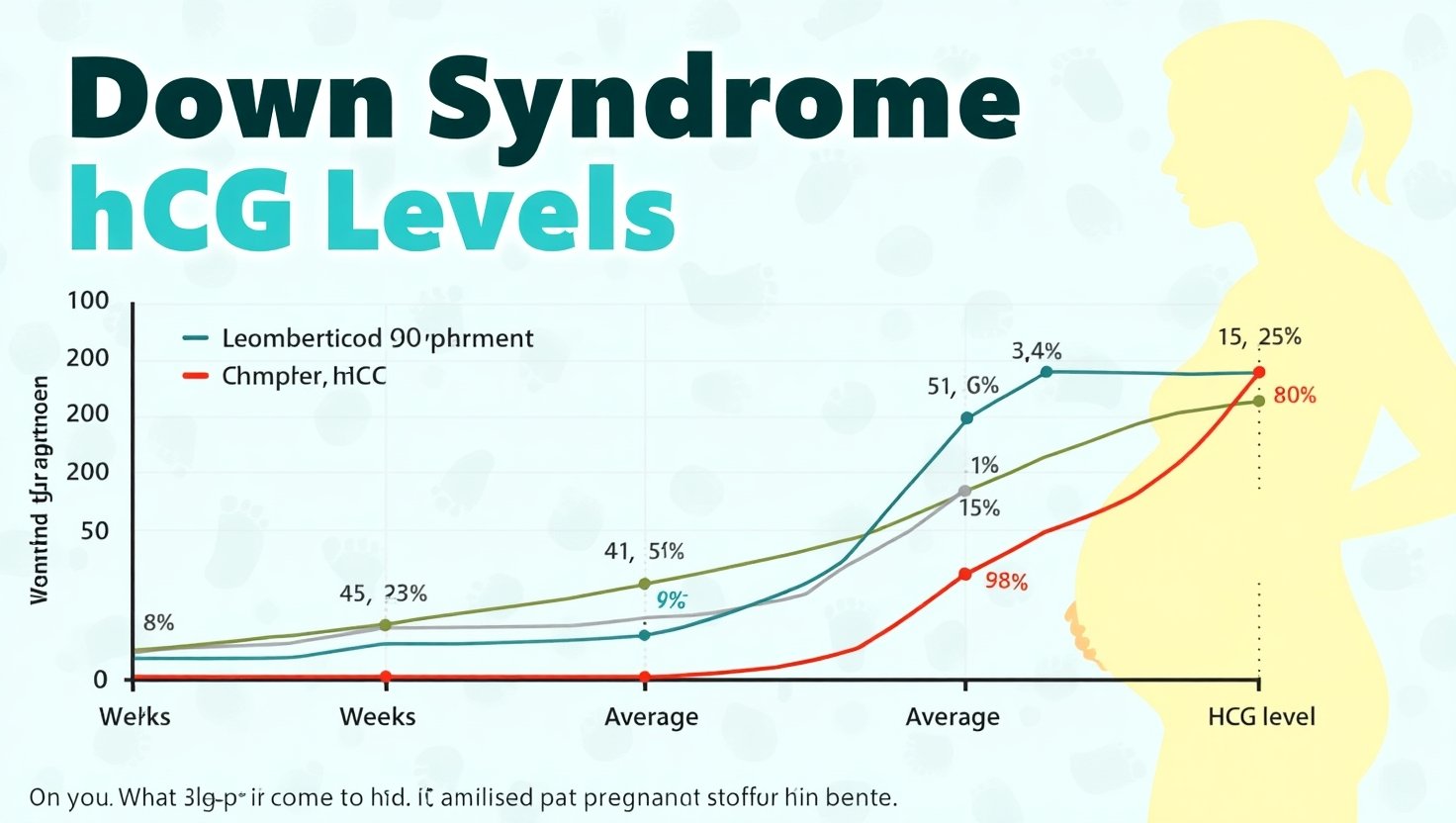
When it comes to Down Syndrome hCG levels, many expecting parents ask: what exactly do these levels indicate? Can a blood test really hint at the possibility of a genetic condition this early? Human chorionic gonadotropin (hCG) is a hormone closely monitored during pregnancy—but its connection to Down Syndrome often stirs confusion and concern. Let’s dive into the science and clear up the mystery.
In pregnancies affected by Down Syndrome, hCG levels tend to be significantly higher than average during the first trimester. Studies show that free beta-hCG levels can be nearly twice as high in affected pregnancies. Paired with other screening markers, these hormone levels play a vital role in early risk assessment.
But hCG is only one piece of the puzzle. Experts like Dr. Mary Norton, a renowned specialist in maternal-fetal medicine, emphasize the importance of understanding all prenatal indicators. This article discusses high levels of hCGβ (≥10 times the average) found in maternal screening for Down syndrome. It covers how often this occurs, the causes, the outcomes, and the recommended guidelines for managing these findings.
So, if you’re ready to explore how hCG fits into the broader picture of detection of down syndrome in the first trimester—read on and make informed choices with clarity for pregnant women.
What Is Considered High HCG Levels in Down Syndrome?
In the context of Down syndrome, hCG serum levels that are higher than normal can be indicative of an increased risk for the condition. During a typical pregnancy, hCG levels tend to rise steadily, peaking at around 10 weeks. However, in pregnancies where there is a risk of Down syndrome, these levels may appear unusually elevated or altered compared to the average pregnancy.
High hCG levels do not confirm the presence of Down syndrome but rather indicate the possibility of the condition. In particular, the combination of high hCG levels with other markers like low PAPP-A (pregnancy-associated plasma protein A) can help identify pregnancies at greater risk for Down syndrome.
These tests are most commonly performed in the first trimester, as early detection allows syndrome in the first trimester for better management and planning.
Do High Levels of hCG Indicate Down Syndrome?
While elevated hCG levels can be associated with Down syndrome, they do not serve as definitive proof that the baby has the condition. High levels of hCG are a potential indicator, but they can also be linked to other factors, such as multiple pregnancies (twins or triplets), molar pregnancies, or other abnormalities unrelated to Down syndrome.
It’s important to understand that hCG levels alone do not confirm Down syndrome; they are simply one part of a broader screening process that includes other maternal blood tests and ultrasound evaluations. When combined with other risk factors, these levels can contribute to a more accurate assessment.
Very Elevated hCGβ in Maternal Screening for Down Syndrome, This study examines the frequency, causes, outcomes, and guidelines associated with hCGβ levels (≥10 multiples of the median) in maternal marker screening for Down syndrome.
Understanding Elevated hCG Levels in Down Syndrome Screening
Maternal serum human chorionic gonadotropin (hCG) levels serve as an important marker for Down syndrome, particularly during the second trimester. Screening for
Down’s syndrome using serum levels of human chorionic gonadotropin can help detect pregnancies affected by Down’s syndrome, especially when combined with ultrasound screening for Down’s syndrome.
Elevated concentrations of hyperglycosylated hCG may indicate an increased risk of Down’s syndrome, making it crucial for antenatal screening for Down’s syndrome. In pregnancies with a family history of Down’s syndrome, maternal serum screening for Down’s can provide valuable information for expectant parents.
The detection of Down’s syndrome is often facilitated by analyzing intact hCG and low maternal serum values, providing a comprehensive approach to prenatal screening for Down’s syndrome.
Does the First Trimester Test or the Integrated Test Detect All Pregnancies with Down Syndrome?
The first trimester test and the integrated test are both used to assess the risk of Down syndrome in a pregnancy. These screenings combine various factors, including maternal age, ultrasound measurements (such as the nuchal translucency), and blood test results, including levels of human chorionic gonadotrophin.
However, these tests do not detect all down syndrome pregnancies. They are screening tests, meaning they assess the likelihood of a baby having Down syndrome but cannot provide a definitive diagnosis.
In fact, many pregnancies with Down syndrome will not be detected by these tests, and some healthy pregnancies may receive false positive rates. If a screening test suggests a higher risk, further diagnostic tests, such as amniocentesis or chorionic villus sampling (CVS), are often recommended for a more accurate diagnosis.
To evaluate the effectiveness of first-trimester screening for trisomies 21, 18, and 13, we consider factors such as gestational age, fetal NT thickness, fetal heart rate, and maternal serum free ß-hCG and PAPP-A levels.
What Does a Screen Positive Result for Down Syndrome Mean?
A screen-positive result for Down syndrome means that the test has identified a higher-than-average risk of the baby having Down syndrome. However, it’s important to remember that a positive screening result is not a diagnosis. Rather, it indicates that further testing is needed to confirm or rule out the condition.
A positive screen result could be based on a variety of factors, including abnormal hCG levels, nuchal translucency measurements, and other markers in the mother’s blood.
In cases where the screening indicates an elevated risk, diagnostic tests like amniocentesis or CVS can provide a more accurate answer. While these procedures carry a small risk of miscarriage, they are considered the gold standard in diagnosing Down syndrome.
What hCG Level Indicates Down Syndrome?
There is no exact hCG level that definitively indicates Down syndrome. However, in pregnancies where Down syndrome is suspected, the hCG level is typically higher than the average range seen in pregnancies without chromosomal abnormalities.
Elevated hCG levels in combination with other screening markers—such as abnormal nuchal translucency or PAPP-A levels—can raise the suspicion of Down syndrome.
For example, in some studies, hCG levels may be twice as high in pregnancies affected by Down syndrome compared to those unaffected pregnancies. However, it’s crucial to note that the interpretation of hCG levels is not straightforward, as many other factors can affect these levels.
Down Syndrome hCG Levels by week:
hCG levels can vary throughout pregnancy, with different patterns observed in pregnancies affected by Down syndrome. Below, we break down the general trends in hCG levels at various stages of pregnancy.
– Down Syndrome hCG Levels at 4 Weeks
At 4 weeks, the hCG levels in a typical pregnancy are usually quite low, ranging from 5 to 50 mIU/mL. At this early stage, there isn’t sufficient data to distinguish pregnancies affected by Down syndrome, as the hormone levels are just beginning to rise. However, hCG can still be detected in the blood at this time.
– Down Syndrome hCG Levels at 5 Weeks
By 5 weeks, hCG levels typically rise more rapidly, ranging from 18 to 734 mIU/mL. At this point, it’s still difficult to differentiate between pregnancies affected by Down syndrome and those that are not. However, any significant deviation from the expected range could signal the need for further testing, especially if there are other risk factors present.
– Down Syndrome hCG Levels at 6 Weeks
At 6 weeks, hCG levels continue to increase, ranging from 1,080 to 56,500 mIU/mL. For pregnancies affected by Down syndrome, hCG levels may be higher than expected, although variations are still common. It is at this stage that doctors will often begin to monitor trends and compare them with other screening markers to assess the likelihood of Down syndrome.
– Down Syndrome hCG Levels at 7 Weeks
By 7 weeks, hCG levels typically range from 7,650 to 229,000 mIU/mL. In pregnancies affected by Down syndrome, hCG levels may be elevated, but the exact patterns can vary. For instance, hCG levels may peak earlier than in typical pregnancies, and this variation can contribute to a higher-than-average risk of the condition.
– Down Syndrome hCG Levels at 12 Weeks
At 12 to 13 weeks, hCG levels peak, typically ranging from 25,700 to 288,000 mIU/mL. In pregnancies affected by Down syndrome, hCG levels may be significantly higher than the average. This peak is an important time for screening tests, including the first trimester screening, which looks for elevated hCG levels along with other indicators like nuchal translucency.
Commonly Asked Questions about High Hcg Levels Down Syndrome (FAQs)
Does High hCG Levels Mean Down Syndrome?
High hCG levels can suggest a higher risk of Down syndrome, but they’re not definitive. Confirmatory tests like amniocentesis or NIPT are needed for an accurate diagnosis.
What hCG Levels Indicate Down Syndrome?
Elevated hCG levels (typically 2.5 MoM or higher) in pregnancy screening may indicate Down syndrome risk, but diagnosis requires confirmatory tests like NIPT, amniocentesis, or CVS.
What Level of hCG Indicates Down Syndrome?
Increased hCG levels during pregnancy can suggest Down syndrome risk, typically above 2.0 MoM (multiples of the median) in the first trimester, but further testing is needed for diagnosis.
What are HCG levels and how do they relate to Down syndrome?
HCG, or human chorionic gonadotropin levels, is a hormone produced during pregnancy. HCG levels can be measured through blood tests and are often used in maternal serum human chorionic screening for Down syndrome. Abnormal levels may indicate an increased risk for fetal Down syndrome, prompting further testing or screening options.
How does the first trimester screening for Down syndrome work?
The first trimester screening for Down syndrome typically involves a blood test to measure specific markers, including maternal serum HCG levels, along with an ultrasound to assess the nuchal translucency. This combined information helps estimate the risk of Down syndrome in the fetus.
What are normal HCG levels during pregnancy?
Normal HCG levels can vary widely depending on the stage of pregnancy. In the first trimester, typical HCG values range from about 5 to 50,000 mIU/mL. However, serum total hcg are highly individualized, and a healthcare provider can provide more accurate interpretations based on specific circumstances.
Can high HCG levels indicate Down syndrome?
High HCG levels may be associated with an increased risk of Down syndrome, but they are not definitive. Elevated levels can also occur in normal pregnancies or other conditions. Therefore, high HCG levels should prompt further evaluation rather than being interpreted in isolation.
What is serum screening and how does it relate to Down syndrome?
Serum screening for down syndrome, also known as maternal serum screening, involves testing the levels of specific substances in the mother’s blood, including HCG, to assess the risk of chromosomal abnormalities such as Down syndrome. This screening is typically done in the first and second trimester of pregnancy.
What does it mean if my HCG concentration is low?
Low HCG concentrations in maternal serum can indicate a range of conditions, including a possible miscarriage or an ectopic pregnancy. However, low levels do not specifically indicate Down syndrome. A healthcare provider can interpret low HCG levels in the context of overall maternal and fetal health.
How does maternal age affect the risk of Down syndrome?
Maternal age is a statistically significant factor in the risk of Down syndrome. Pregnancies in older mothers, particularly those over 35, have a higher likelihood of chromosomal abnormalities. HCG levels and other markers are often used in screening to assess risk in relation to maternal age.
What follow-up tests are available if initial screening suggests a risk for Down syndrome?
If initial screening indicates an increased risk for Down syndrome, follow-up diagnostic tests such as amniocentesis or chorionic villus sampling (CVS) may be recommended. These tests can provide definitive information about the presence of Down syndrome and other genetic conditions.
What level of AFP indicates Down syndrome?
A high level of alpha fetoprotein (AFP) in maternal blood, typically above 2.5 multiples of the median, can indicate an increased risk of Down syndrome in the fetus.
What is the normal range of trisomy 18?
The normal range for trisomy 18 is typically characterized by low alpha fetoprotein (AFP) levels, often below 0.5 multiples of the median in maternal serum screening tests.
Conclusion
Understanding the relationship between Down syndrome and hCG levels is essential for expecting parents and healthcare providers. While elevated hCG levels may raise suspicion, they are not definitive proof of Down syndrome. It’s important to use a combination of tests and screenings to assess the risk and make informed decisions. Regular prenatal care, early screenings, and follow-up testing can help ensure a healthy pregnancy, and provide reassurance or clarity about potential risks.
By understanding how hCG levels interact with other factors in Down syndrome screening, parents can be more prepared for their journey and make informed choices regarding further diagnostic testing.
Recommended posts
- Down Syndrome 4d Ultrasound: Can It Detect Early Signs?
- Why Doctors Look at Palm Crease in Down Syndrome Diagnosis?
- 7 Early Signs of Down Syndrome in Newborn Babies to Look For
- Newborn Down Syndrome Ears & ENT Support: A Parent’s Guide
- Can NIPT Test for Down Syndrome Be Wrong? Accuracy Explained
- Chances of Down Syndrome and Twins (Key Facts)