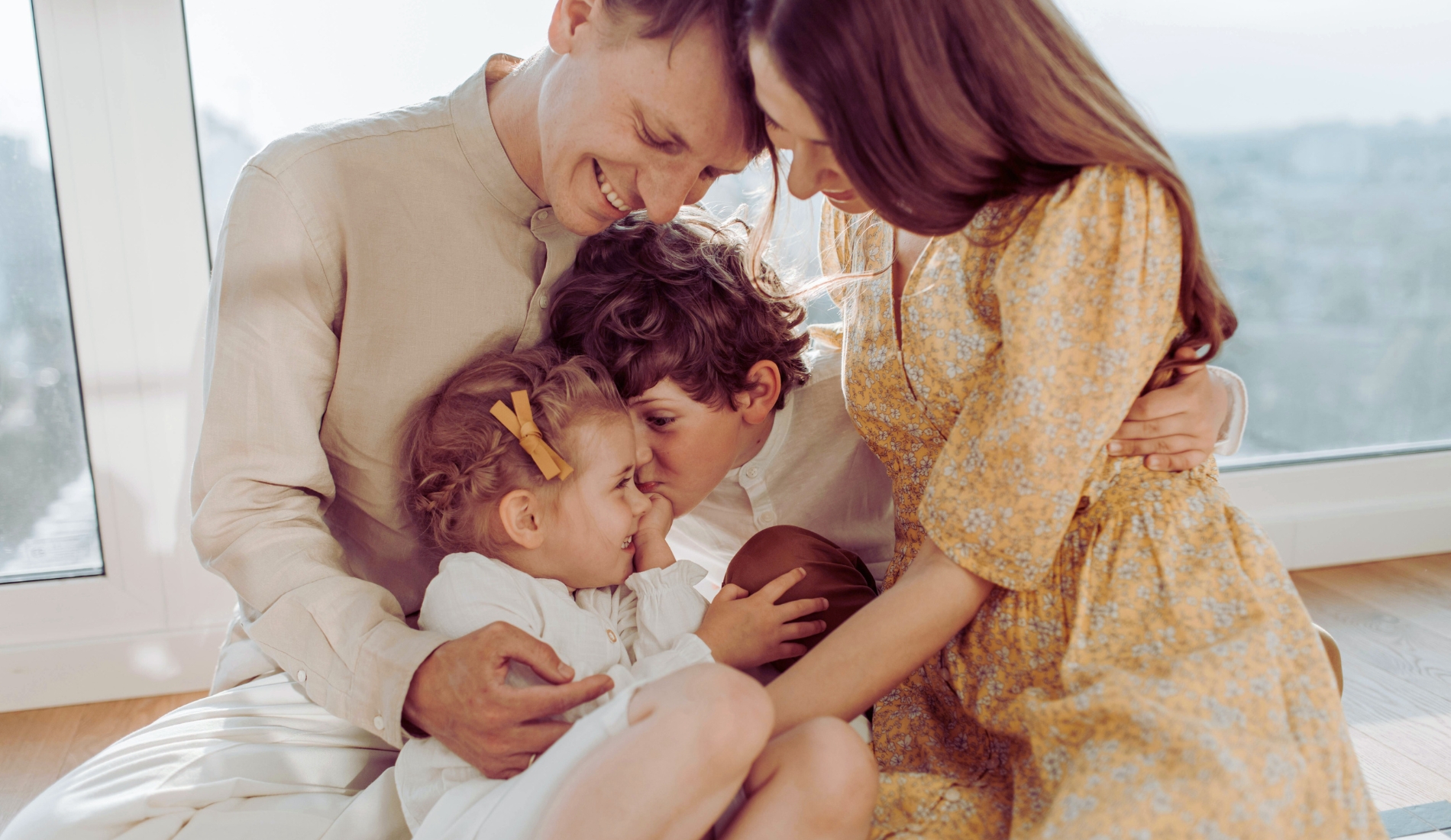
How Family Effects on Human Development always sparks curiosity. We grow, learn, and build our identity inside our homes, but how deep does that influence truly go? Don’t you wonder why some people flourish while others struggle, even when they live in the same society? Let’s explore that connection right from the roots.
Family shapes emotional strength, cognitive growth, and social behavior in direct ways. Researchers like Urie Bronfenbrenner show how a child’s closest environment drives confidence, empathy, and long-term success. This article gives you a crisp look into how family bonds, communication styles, and support systems impact human development across all life stages.
You’ll soon see that family influence goes far deeper than daily routines or household rules. Many hidden layers guide personality, resilience, and future achievements. So, stay with me as we step into the insights experts offer and uncover the real forces that shape human growth from childhood to adulthood.
How Family Effects on Human Development?
Families serve as the cornerstone of human development, influencing social, emotional, and cognitive growth. From infancy through adulthood, family dynamics either create a nurturing environment or pose challenges that can have lasting effects.
Children learn their first lessons about relationships, trust, and communication at home. Secure attachments formed in early childhood with caregivers can lead to higher self-esteem and better social skills, while insecure attachments may contribute to future relational difficulties.
Research has shown that parental involvement can significantly affect academic performance and cognitive abilities. Children whose families actively engage in their education tend to perform better in school, showing higher levels of motivation and commitment.
Additionally, the socioeconomic status of a family can impact access to educational resources, with lower-income families often struggling to provide the same educational support as their higher-income counterparts.
The Impact of Family Engagement on Children’s Mental Health
Family engagement—the active, positive, and consistent involvement of caregivers in a child’s emotional and intellectual world—is a critical buffer for mental health. It is the single most powerful predictor of a child’s psychological resilience.
Engaged families provide a “secure base” from which children can explore the world. When parents are emotionally available, attuned to their child’s needs, and consistently responsive, they co-regulate the child’s nervous system.
This teaches children how to identify, express, and manage their own emotions, reducing the risk of internalizing disorders like anxiety and depression. Conversely, emotional neglect, high conflict, or inconsistent parenting can lead to chronic stress, dysregulation, and a heightened vulnerability to mental health challenges.
Key practices of engaged families that promote mental wellness include:
- Active Listening: Validating feelings without immediate judgment or solutions.
- Routine and Predictability: Creating a structured environment that reduces anxiety.
- Positive Reinforcement: Focusing on and praising effort and character, not just outcomes.
- Open Communication: Fostering an atmosphere where difficult topics can be discussed.
Studies consistently show that children from engaged, supportive families exhibit higher self-esteem, better coping skills, and lower rates of behavioral problems and substance abuse well into adolescence and adulthood.
How Family Relationships Influence Who We Become?
Our core identity—our sense of self, our values, our relationship patterns—is forged in the crucible of family relationships. These dynamics script the narratives we carry about ourselves and others.
- Parent-Child Dynamics: Authoritative parenting (high warmth, high structure) is linked to confident, competent, and socially responsible individuals. Authoritarian (low warmth, high control) or permissive (high warmth, low structure) styles can lead to either rebelliousness or a lack of self-discipline, respectively. Neglectful parenting has the most consistently negative outcomes.
- Sibling Relationships: Siblings are our first peers. These relationships teach negotiation, cooperation, and conflict management. Rivalry can foster competitiveness, while supportive bonds build empathy and loyalty. Birth order, though not deterministic, can shape traits like leadership (often seen in first-borns) or sociability (sometimes seen in later-borns).
- Spousal/Partner Relationships: The relationship between parents is a child’s primary model for intimate partnership. Children who witness respect, healthy conflict resolution, and affection learn to expect and replicate those patterns. Those exposed to contempt, hostility, or abuse often struggle with trust and may either repeat or react violently against these patterns.
These relational templates become internalized, guiding our choice of friends, partners, and how we navigate professional hierarchies. They form the subconscious blueprint for “how people treat each other.”
The Impact of Family Structure on the Health of Children: Effects of Divorce
While family processes (the quality of relationships) are generally more impactful than family structure (the legal or children living arrangement), significant structural changes like divorce create profound process disruptions that affect child health.
Divorce is not a single event but a cascade of stressful changes: parental conflict, potential economic decline, relocation, and the restructuring of daily life. The primary mediator of its impact is inter-parental conflict. High-conflict divorces that involve children in loyalty battles are particularly damaging, leading to:
- Emotional and Behavioral Distress: Increased anxiety, depression, anger, and acting out.
- Academic Difficulties: Trouble concentrating and drops in academic performance.
- Social Challenges: Withdrawal from peers or engaging in risky social behaviors.
- Long-Term Relationship Skepticism: Difficulty trusting partners and fear of commitment.
Crucially, research indicates that children from stable, low-conflict single-parent or divorced families often fare better than those in high-conflict, intact two-parent households. The critical factor is the post-divorce environment: cooperative co-parenting, consistent routines, and the maintenance of a loving, stable relationship with both parents whenever safely possible mitigate negative effects and support resilience.
The Long-Term Effects of Multiple Parental Partnerships on Children’s Emotional Development
The formation of multiple parental partnerships, leading to blended or sequential family structures, introduces additional complexity. While a stable, loving stepfamily can provide invaluable support, the transition period and potential for ongoing instability pose risks.
Frequent family transitions (e.g., a parent having multiple live-in partners) can be particularly challenging for a child’s emotional development. The long-term effects may include:
- Attachment Insecurity: Repeated formation and potential loss of caregiver bonds can hinder the development of secure attachment, leading to an “insecure” style that manifests as clinginess or emotional detachment in future relationships.
- Erosion of Trust: Instability can teach children that relationships are transient and unreliable.
- Loyalty Conflicts: Children may feel torn between biological parents and new partners, leading to guilt and anxiety.
- Increased Risk of Externalizing Behaviors: Some studies correlate multiple family transitions with higher risks of delinquency and early sexual activity, often as a search for stability or belonging.
Success in these contexts hinges on the adults providing clear communication, respecting the child’s bond with their other biological parent, allowing relationships with new partners to develop slowly and naturally, and prioritizing the child’s need for stability over adult romantic desires.
Family Processes Examples
Understanding “family processes” is key to moving beyond simple structural definitions. Here are concrete examples of healthy vs. strained processes:
Healthy Family Processes:
- Emotional Validation: A child cries after losing a game. A parent says, “It’s okay to feel disappointed. I saw how hard you tried,” instead of “Don’t be a baby.”
- Collaborative Problem-Solving: The family holds a meeting to discuss chores, allowing each member voice their opinion to reach a fair solution.
- Rituals and Traditions: Consistent weekly family dinners or holiday traditions that create a sense of belonging and continuity.
- Supportive Communication: Siblings cheering for each other at events or helping with homework without being asked.
Dysfunctional Family Processes:
- Triangulation: A parent complaining to a child about the other parent, forcing the child into an emotional middleman role.
- Enmeshment: Lack of personal boundaries, where a parent relies on a child for their own emotional needs, stifling the child’s independence.
- Scapegoating: One child consistently blamed for family problems, leading to low self-esteem and resentment.
- Inconsistent Discipline: Rules and consequences that change arbitrarily based on a parent’s mood, creating anxiety and testing of limits.
Common Questions about The Impact of Family Dynamics on Children’s Mental Health (FAQs)
How does family influence a child’s development?
Family influences in human development are crucial, as the nuclear family shapes a child’s values, behavior, and emotional well-being. The biological parent of the child plays a critical role in rearing children, impacting their social, cognitive, and emotional growth.
How to support a child with mental health issues?
To support a child with mental health issues, foster open communication, validate their feelings, and offer reassurance. Involve the child’s nuclear family and any cohabiting couples for a united support system, ensuring they feel loved and understood throughout their journey.
What is an example of socialization in children?
An example of socialization in children is family interactions during meal times, where parents and siblings engage in conversation and share experiences. This helps children learn social cues, values, and acceptable behaviors, shaping their abilities to interact within society.
How does family influence a child’s brain development and sense of security?
Family environments shape brain development, emotional regulation, socialization of children, and sense of security. Parental responsiveness, rearing practices, and family experiences influence cognitive skills, relationships with peers, and long-term mental health outcomes through ongoing interpersonal relationships and supportive caregiving consistently.
What effects do children of divorced parents and blended families experience?
Children of divorced parents and in blended families may face adjustment challenges, but stable co-parenting, clear parenting tasks, supportive extended family members, and consistent routines promote resilience, better relationships with peers and siblings, and improved mental health outcomes over time.
How do one‑parent, foster families, and adoptive families impact child development?
One-parent, foster families, and adoptive families can provide nurturing rearing when resources and social support exist. Financial strain, social class, and parenting tasks impact stress, but strong bonds, consistent caregiving, kinship networks, and community services support children’s thriving and resilience.
What are the effects of intimate partner violence or physical abuse on children?
Intimate partner violence and physical abuse severely damage brain development, increase feelings of anxiety, and disrupt socialization of children. Prompt safe removal, trauma-informed therapy, stable rearing, and supportive caregivers reduce harm and improve long-term interpersonal relationships and mental health outcomes.
How do siblings, full siblings, and stepsibling relationships shape children’s lives?
Siblings are present across multigenerational families and influence social skills, conflict resolution, and identity. Full siblings, stepsibling relationships, and cohabiting families offer diverse models of kinship, support the family, and shape children’s lives through experiences, play, boundary-setting, and emotional learning.
How do extended family members, kinship, and new family formations support children?
Extended family members, kinship caregivers, and new family formations like binuclear and cohabiting families contribute social capital, routine, and a sense of security. Coordinated parenting tasks, help children function, and modeled healthy interpersonal relationships improve children’s social development and wellbeing.
Conclusion
Understanding how family effects on human development is vital for fostering healthier individuals and communities. Family dynamics influence mental health, emotional development, and the foundational skills necessary for navigating life’s challenges.
By recognizing the importance of family engagement, the role of relationships in shaping identity, and the impacts of family structure, we can better support families and implement strategies that promote positive growth for children. Prioritizing healthy family processes can pave the way for future generations to thrive emotionally, socially, and academically.
Recommended posts
- 7 Creative Engaging Family Activities Your Kids Actually Love
- Powerful Ways for Strengthening Family Relationships (Tested)
- The Real Importance of Family Bonding for Healthier Homes
- Parental Involvement in Education: The Game-Changer Every Child Deserves
- The Power of Parent Involvement in Early Childhood Education
- Negative Effects of Lack of Parent Involvement in Education
- The Powerful Role of Parents in Students Success (Explained)
- 3 Proven Ways to Strengthen Early Bond with Your Baby (Tested)
- Physical Changes in Early Childhood Theory & Definition