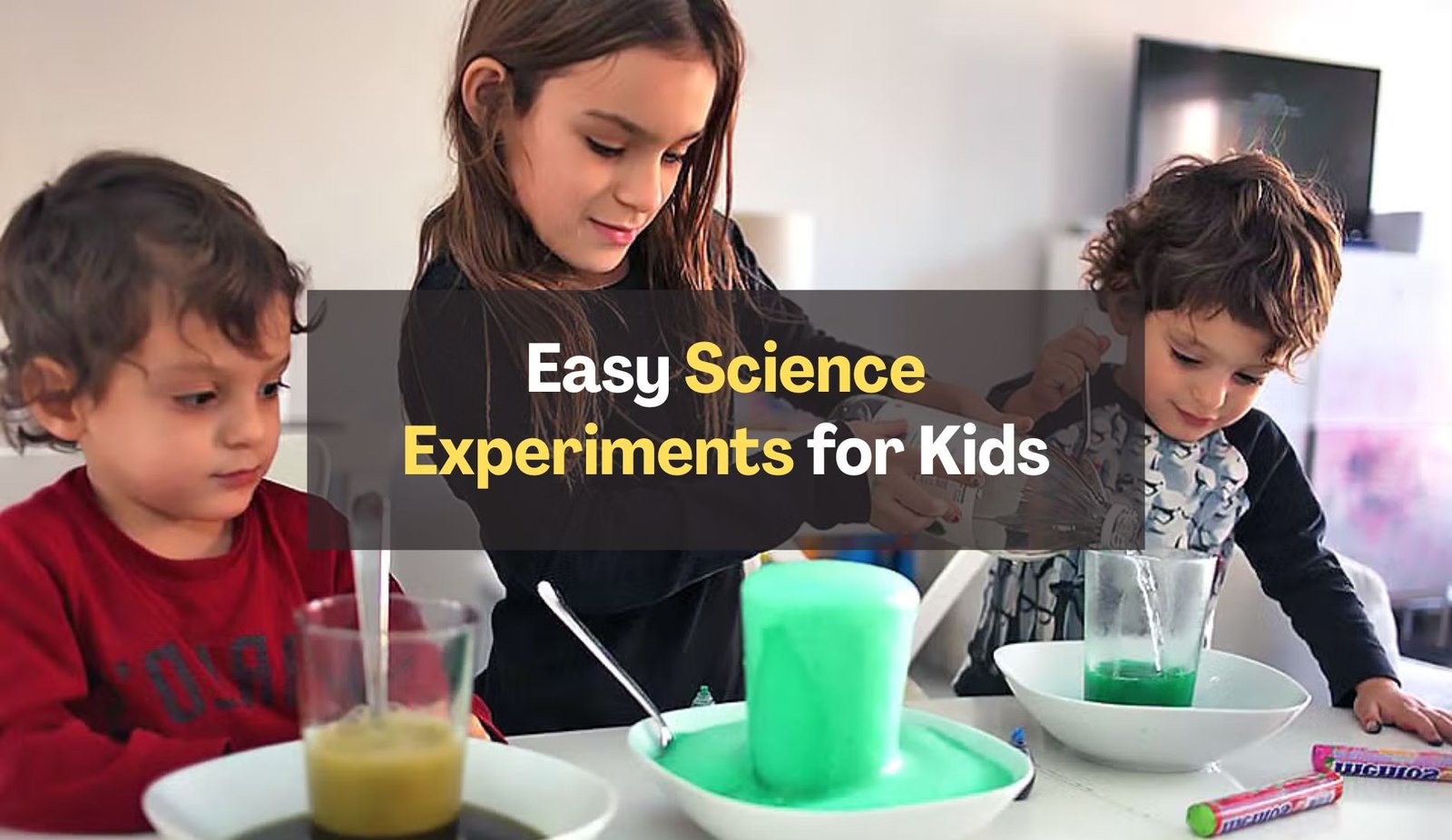
Looking for fun and educational science experiments for kids that spark curiosity at home? Have you ever wondered how simple household items can turn into exciting experiments? These activities make learning hands-on, engaging, and full of surprises for young minds.
science experiments like, creating colorful volcano eruptions to building homemade slime and exploring simple circuits, science activities at home turn ordinary moments into extraordinary discoveries. They help children develop critical thinking, creativity, and a love for learning.
In this article, we’ll share safe, easy-to-do experiments that keep kids entertained while teaching important scientific concepts.
But these experiments are just the beginning! Renowned educator Bill Nye emphasizes, “Science is about knowing; experiments make kids understand.” So, let’s jump into a world of exciting science experiments for kids that are fun, educational, and perfect for curious young explorers!
TOP 15 Easy Science Experiments for Kids
Engaging kids in science can spark their curiosity and love for learning! Here are 15 easy science experiments that are perfect for young explorers. These hands-on activities use common household items, making them accessible and fun.
From colorful chemical reactions to exploring the wonders of nature, each experiment is designed to teach basic scientific principles while providing an exciting experience. Let’s dive into a world of discovery and creativity with these simple projects!
1. Inflate a Balloon with Vinegar and Baking Soda
This classic experiment shows how a chemical reaction can produce gas. Fill a small bottle halfway with vinegar. Using a funnel, put two teaspoons of baking soda into a balloon.
Carefully stretch the balloon over the bottle’s opening and let the baking soda fall in. As the vinegar reacts with the baking soda, it creates carbon dioxide gas that inflates the balloon. This science experiment demonstrates gas formation and the basics of acid-base reactions kids can easily observe.
2. Make Elephant Toothpaste
Elephant toothpaste is a thrilling demonstration of rapid chemical reactions. In a tall bottle, combine warm water, dish soap, and food coloring. Add hydrogen peroxide, then pour in yeast mixed with water.
Almost instantly, a foamy eruption shoots up like toothpaste for an elephant! The yeast acts as a catalyst, breaking down the hydrogen peroxide into water and oxygen. This exothermic reaction produces heat and lots of bubbles—making it one of the most exciting and safe experiments for supervised children.
3. Skittles Rainbow Diffusion
Turn candy into color magic! Arrange Skittles in a circle on a plate, alternating colors. Pour warm water into the center until it touches all candies. Watch as the colors dissolve and spread, forming a vibrant rainbow.
The sugar coating on Skittles dissolves in water, allowing the colored dyes to move toward the center without mixing too quickly. This simple diffusion experiment teaches about solubility, molecular movement, and how colors mix in liquids—all while being visually stunning!
4. Mix Up Some Fluffy Slime
Kids love slime, and this soft, stretchy version adds a sensory twist. Mix white glue with shaving cream and a few drops of food coloring. Add a small amount of contact lens solution (containing boric acid) to thicken the mixture.
Stir and knead until it reaches the desired texture. The reaction between the borate ions and glue molecules creates long polymer chains, turning liquid into a stretchy solid. It’s chemistry you can touch, stretch, and squish for hours of play.
5. Mentos and Diet Coke
One of the most explosive science experiments for kids! Drop a few Mentos candies into a bottle of Diet Coke and quickly step back. The soda will shoot up like a geyser! The rough surface of the Mentos allows carbon dioxide bubbles to form rapidly, releasing gas trapped in the soda. The result is an energetic, fizzy fountain that’s thrilling and safe when done outdoors. It’s an amazing demonstration of physical reactions and surface tension.
6. Make a Bouncy Ball with Corn Starch
Combine simple ingredients to make your own rubbery bouncy ball. Mix 1 tablespoon of white glue with 1 tablespoon of cornstarch, a few drops of food coloring, and a small amount of borax solution. Stir, then roll into a ball shape.
The borax links the polymer molecules in the glue, forming an elastic, stretchy material. This experiment introduces polymer chemistry and demonstrates how molecular structures affect physical properties—plus, kids get a toy to keep!
7. Create Colorful Chalk with Plaster of Paris
Homemade chalk is perfect for art and science together. Mix plaster of Paris with water until smooth, then stir in food coloring or washable paint. Pour the mixture into molds (like ice cube trays) and let it harden for a few hours.
Once dry, pop out your colorful chalk sticks. This teaches kids about mixtures, setting reactions, and the transition from liquid to solid. The result? A fun art supply born from a mini chemistry lesson!
8. Make a Groovy Lava Lamp
Transform a bottle of oil and water into a mesmerizing lava lamp. Fill a clear bottle three-quarters full with vegetable oil and the rest with water. Add a few drops of food coloring and drop in an Alka-Seltzer tablet.
As it dissolves, bubbles of carbon dioxide carry colored water upward, creating a floating, glowing effect. This experiment explores liquid density, gas formation, and immiscible substances. For an extra glow, shine a flashlight from below!
9. Oobleck Made Easy
Oobleck is a non-Newtonian fluid that behaves like both a liquid and a solid. Mix 1 cup of cornstarch with ½ cup of water and a few drops of food coloring.
When you squeeze or tap it, Oobleck feels hard, but it flows like a liquid when left alone. It’s a fantastic way to teach kids about fluid dynamics and states of matter, all while giving them a hands-on, sensory experience that’s endlessly entertaining.
10. Plasma Ball and Light Bulb Tricks
A plasma ball isn’t just a cool decoration—it’s a mini physics lesson! When you touch the glass, your body conducts electricity, pulling plasma filaments toward your finger. Try bringing a fluorescent bulb near the ball—it will light up without touching it!
This happens because the plasma emits electromagnetic energy that excites the gas inside the bulb. Kids can explore static electricity, conduction, and the fascinating world of plasma physics safely and visually.
11. Make Biggest Bubbles with Sugar and Dish Soap
Create super-strong bubbles using sugar! Mix one cup of water with two tablespoons of dish soap and one tablespoon of sugar. Gently stir and let it rest for a few hours. Dip a wand and blow!
The sugar crystals strengthens the soap film, allowing larger, longer-lasting bubbles. This fun activity introduces surface tension and cohesion concepts, while kids compete to see who can make the biggest bubble without popping it. Science has never been this fun—or floaty!
12. Chemical Reactions with Milk and Lemon Juice
Teach kids how acids cause chemical changes! Pour a cup of warm milk into a bowl, then add a few teaspoons of lemon juice. Stir and watch as the milk curdles. The acid in lemon juice causes the proteins in milk to coagulate, forming curds and whey.
This creative science experiment introduces the basics of food chemistry and how substances change when mixed. It’s the same science behind cheese-making—delicious chemistry in action!
13. Making DIY Playdough
Homemade playdough is a mix of art, sensory fun, and science. Combine flour, salt, cream of tartar, water, and a few drops of food coloring. Cook on low heat while stirring until it thickens into dough. Once cool, knead until smooth.
The heat causes starches to gelatinize, changing texture from sticky to soft and pliable. This experiment shows kids how temperature affects chemical structures—plus, they get colorful, squishy playdough to mold and create!
14. Oil + Water Density Stack of Liquids
Teach density with a colorful stack! Pour honey, dish soap, water (with food coloring), oil, and rubbing alcohol into a clear glass—slowly and in that order. The liquids form distinct layers because of their different densities.
Drop in small items like beads or grapes to see where they float. This striking experiment demonstrates buoyancy, density, and molecular structure, helping kids visualize how different substances interact based on weight and composition.
15. Milk and Food Coloring Experiment
This experiment creates moving art! Pour whole milk into a shallow dish and add drops of different food colors. Dip a cotton swab in dish soap and touch the milk’s surface—the colors swirl dramatically! The soap breaks down fat molecules in the milk, creating motion as the surface tension changes.
It’s a stunning, simple way to teach about chemistry, surface tension, and molecular interaction—all through color and movement.
Easy Engineering Experiments and STEM Challenges
Once you’ve mastered the classic chemical reactions, it’s time to level up with engineering and STEM challenges that focus on the practical application of scientific principles. These activities encourage problem-solving, iterative design, and a deeper understanding of physics and mechanics.
- The Egg Drop Challenge: A quintessential engineering problem. The goal is simple: design a contraption using Materials you already have (e.g., straws, tape, paper, cotton balls) that will protect a raw egg from breaking when dropped from a significant height. This teaches kids about shock absorption, force distribution, and the engineering design cycle as they test, fail, and improve their prototypes.
- Build a Popsicle Stick Bridge: Challenge your young engineer to construct a bridge that can hold the most weight using only popsicle sticks and glue. This introduces fundamental concepts of civil engineering, including structural integrity, load distribution, and truss designs. Test the bridges by adding weight (like books or cups of pennies) until they collapse, then analyze why it failed and how to build a stronger one.
- Paper Airplane Launcher: Move beyond simple folds and build a consistent launcher for paper airplanes using a rubber band. This standardizes the force applied, allowing for a true test of different airplane designs. Kids can experiment with wing shape, size, and weight to see which variables make a plane fly farther or perform tricks, offering a hands-on lesson in aerodynamics.
- DIY Solar Oven: Harness the power of the sun by building a simple oven from a pizza box, aluminum foil, plastic wrap, and black paper. Use it to melt s’mores or cheese on a cracker. This project demonstrates the principles of solar energy, greenhouse effect, and insulation, showing how we can use renewable energy for practical tasks.
Commonlly Asked Questions about Simple Science Activities at Home (FAQs)
What are some easy science experiments for kids?
Easy science activities at home include making elephant toothpaste, creating slime, and exploring the water cycle. These activities help kids understand scientific concepts using everyday materials for engaging, hands-on learning experiences.
How does baking soda and vinegar create a chemical reaction?
Baking soda and vinegar react to produce carbon dioxide gas, creating fizz and bubbles. This classic experiment demonstrates an acid-base reaction and is a great way to explore science fun at home.
Can kids create colorful rainbows with science experiments?
Yes, kids can create rainbows using food coloring and water. This fun and easy experiment demonstrates light refraction, helping kids understand how colors interact and creating visual excitement.
What is a simple experiment to teach kids about air pressure?
An easy experiment is to inflate a balloon using baking soda and vinegar. This demonstrates air pressure and chemical reactions, making it a fun science experiment for kids of all ages.
What materials are needed for a DIY lava lamp?
To create a DIY lava lamp, you’ll need a clear bottle rocket, water, vegetable oil, food coloring, and Alka-Seltzer or baking soda. This fun science experiment showcases the properties of liquids and density.
How can kids explore viscosity with everyday materials?
Kids can explore viscosity by mixing cornstarch and water to create oobleck. This gooey substance behaves like a solid when squeezed and a liquid when poured, demonstrating interesting properties of materials.
What are some fun science experiments involving Skittles?
A fun experiment is to arrange Skittles around a plate and pour warm water in the center. The colors will diffuse and create a rainbow effect, providing a visually appealing science activity for kids.
How can we use red cabbage in science experiments?
Red cabbage can be used as a pH indicator in science experiments. When mixed with an acidic or basic solution, it changes color, helping kids understand chemical properties and reactions in an engaging way.
What is the purpose of using dish soap in science experiments?
Dish soap can be used in experiments to demonstrate surface tension and create bubbles. It helps kids understand the interaction between liquids and solids while making the experiments extra fun and engaging.
Conclusion
Science becomes truly memorable when children can see, touch, and experiment with the principles behind it. These Science Experiments for Kids make learning dynamic, engaging, and full of discovery. From fizzy chemical reactions to artistic color explosions and clever engineering challenges, each activity teaches valuable lessons about how our world works. Whether at home or in the classroom, these easy to do at home experiments inspire curiosity and confidence—turning young learners into future scientists, inventors, and thinkers. Encourage exploration, embrace the mess, and let learning come alive through the magic of hands-on science.
You might also like
- 100+ Fun Activities for Preschoolers That Encourage Learning
- 15 Cozy Indoor Activities for Families to Enjoy Together
- 10 Fun Activities for Five 5 Old Kids That Boost Creativity
- Baking Soda Volcano Science Experiment (Step-by-Step)