
Best Breastfeeding Positions for Newborns can shape a smoother start for both mother and baby. Have you ever wondered why some positions feel natural while others create discomfort? Many new parents face the same question during those first feeding days.
Lactation experts like Dr. Jack Newman highlight positions such as the cradle hold, football hold, and side-lying pose as the most effective for newborns. These techniques support better latching, reduce strain on the mother’s body, and improve feeding comfort. This guide breaks down each position clearly so parents can choose the one that works best.
Yet these popular nursing positions for newborns represent only part of what helps create stress-free feeding moments. Fresh insights from certified lactation consultants await you. So, step into the full article and discover how to make every breastfeeding session more secure, comfortable, and nurturing.
What Is the Best Position for Breastfeeding a Newborn?
Choosing the right position while breastfeeding can make a substantial difference. The best way to breastfeed your baby depends on various factors, including the baby’s comfort, mother’s physical condition, and any specific medical circumstances such as a C-section.
A good breastfeeding latch position promotes effective milk transfer and minimizes discomfort for the mother. Often, mothers find that certain positions work better for them and their babies.
Exploring different breastfeeding positions is essential, as each comes with its unique benefits, including the ability to establish a good latch, reduce the risk of nipple pain, and facilitate comfortable feeding for both mother and child.
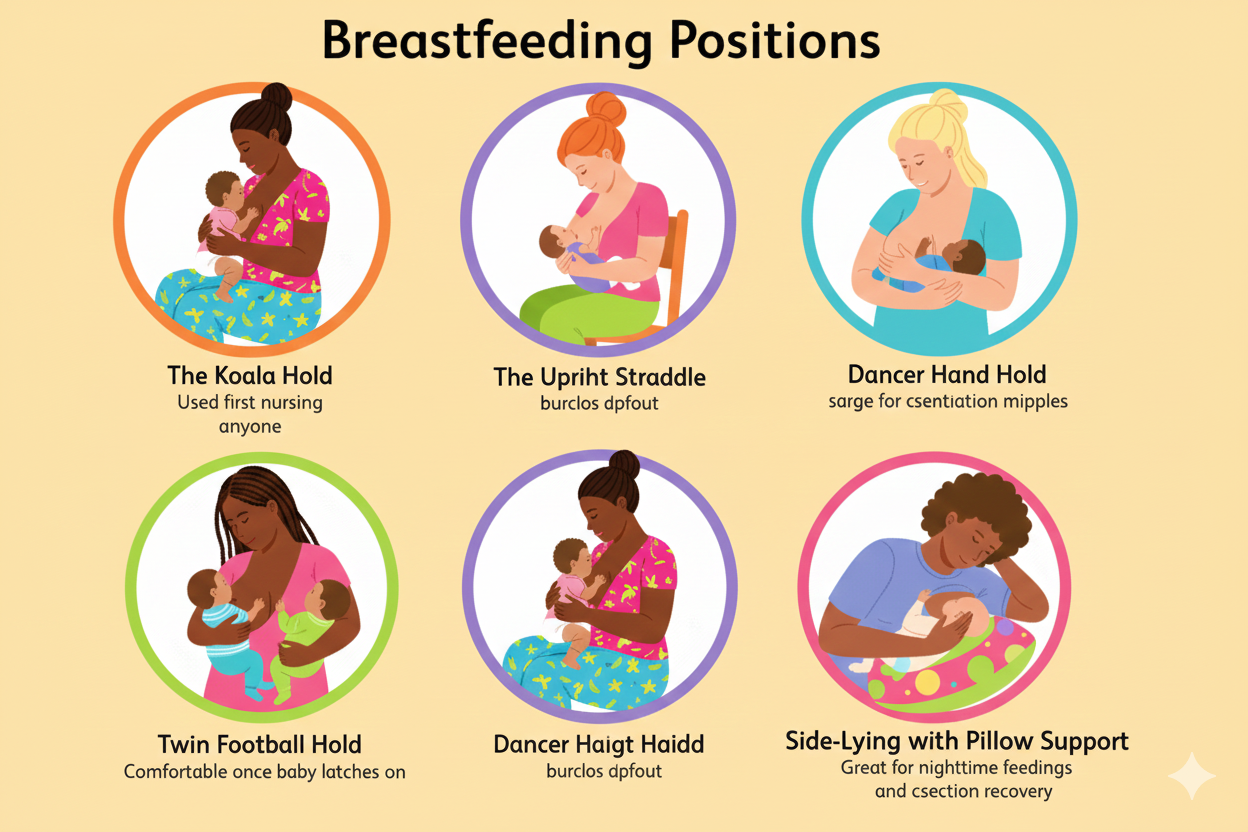
7 Best Breastfeeding Positions for Newborns with Pictures
Below are the most Common breastfeeding positions, described with vivid “picture-style” imagery for easy visualization and immediate implementation.
1. The First Week: Positioning and Latch
In the first week, establishing proper way to breastfeed your little one is vital. A proper latch will ensure the baby efficiently consumes milk and helps prevent nipple soreness. A common approach is the cradle hold, where the baby is held in the mother’s arms, stomach-to-stomach, allowing for a direct and secure feed.
2. Laid-back Breastfeeding after a C-Section
For mothers recovering from a C-section, laid-back breastfeeding can be an excellent option. This position involves reclining slightly, allowing lie your baby on your chest. It reduces pressure on the incision area while promoting skin-to-skin contact, which encourages bonding and helps with breastfeeding.
3. Cross Cradle Hold (Breastfeeding Holds)
The cross cradle hold is another popular position where the opposite arm supports the baby’s head and neck. This position offers better control over the baby’s head and allows the mother to support and guide the baby to the breast. The cross cradle position is ideal for learning to latch because it provides a good view and control.
4. Side-Lying Position
The side-lying position allows mothers to lie down on their side with the baby facing them. This position is especially beneficial for nighttime feedings, providing comfort and facilitating rest for the mother. It encourages a relaxed feeding experience and can help mothers avoid fatigue.
5. Cross-Cradle Hold
The cross-cradle hold, often confused with the previous position, is similar but focuses more on using both hands for support. With the baby’s head in one hand and the breast in the other, this position is excellent for maintaining proper alignment and ensuring a deep latch.
6. Upright Breastfeeding or Koala Hold
The upright position, also known as the koala hold, involves sitting the baby upright on the lap, facing the mother. This position is great for babies with reflux, as it keeps them in a more vertical posture, minimizing discomfort and allowing easier digestion.
7. Rugby/Football Hold
The rugby or football hold involves tucking the baby under the mother’s arm, resembling a football hold. This hold is particularly advantageous for mothers with larger breasts or those who have twins. It allows good visibility of the baby’s latch and provides comfort for both the mother and the infant.
What Is the 4 4 4 Rule for Breastfeeding?
The 4 4 4 rule for breastfeeding is an often-recommended guideline that focuses on four key elements:
- 4 Stages of Feeding: Initiation, Latch, Suck, and Swallow.
- 4 Positions for Feeding: Cradle hold, cross-cradle hold, side-lying, and rugby hold.
- 4 Hours Between Feedings: Encouraging feeding every 2-3 hours in the early weeks, but it can vary based on the baby’s needs.
This approach helps to ensure that both the mother and baby have the best chances of a successful latching breastfeeding experience.
Breastfeeding Tips for a Good Latch
A good latch is essential for successful breastfeeding, and here are some tips to achieve it:
- Positioning: Ensure the baby’s body is aligned and facing the breast.
- Use your hand: Support the breast with your hand to shape it and help the baby latch.
- Chin to breast: Bring the baby to the breast rather than leaning towards them.
- Watch for cues: Look for signs of hunger from your baby and act quickly to latch them effectively.
Ensuring a proper latch can prevent discomfort and encourage a more productive feeding session, benefiting both the mother and child.
What is the 3-3-3 Rule for Breast Milk?
In the early days of breastfeeding, finding the right breastfeeding positions for newborns can make a significant difference. A great breastfeeding position and latching is to hold your baby in a way that gives your baby plenty of support.
You can lift your baby and position them along your forearm, ensuring their head is in your hand for better control. This position allows the baby to latch effectively, which is crucial for successful feeding. If you bring your baby in close, they will help themselves to latch, making it easier for both of you.
Additionally, if you are learning to breastfeed, remember that baby will begin nursing when they are ready, so be patient. Whether you are starting to feed your newborn or adjusting to older babies, this guide to newborn feeding positions you can try will help make the experience more comfortable for you and your little one.
Commonly Asked Questions about Different Breastfeeding Positions to Try (FAQs)
What are the best breastfeeding positions to try for newborns?
Some of the best positions to breastfeed your baby include the cradle hold, cross-cradle hold, side-lying position, and laid-back breastfeeding. Each position can provide comfort and support for both you and your baby, allowing for a good latch and effective feeding.
How do I achieve a good latch while breastfeeding?
To achieve a good latch, position your baby so their mouth is level with your nipple. Guide your baby to your breast, ensuring they open wide. Use your thumb and index finger to support your breast, helping your baby latch deeply to prevent discomfort.
What is the laid-back breastfeeding position?
The laid-back breastfeeding position involves reclining comfortably and placing your baby on your chest. This natural position allows your baby to find the breast on their own, promoting a good latch and making breastfeeding more relaxed for both of you.
Can pillows help with breastfeeding positions?
Yes, using pillows can provide support and comfort while breastfeeding. A breastfeeding pillow can help position your baby close to your body, while additional pillows behind your back can support your posture, making it easier to hold your baby during feeding.
How can I support my baby during breastfeeding?
To support your baby, use your forearm to keep your baby close and secure. Ensure their head is in your hand for stability and guide them to your breast. Providing pillows to support your back can also help make the experience more comfortable.
What is the cross-cradle hold and how do I use it?
The cross-cradle hold involves holding your baby across your body with their head supported by your hand. This position allows you to guide your baby’s latch more effectively and offers control over their positioning, making it easier for them to nurse.
What are some breastfeeding tips for new mothers?
Some helpful breastfeeding tips include experimenting with different positions, ensuring a good latch, and staying relaxed. Keep your baby close, use supportive pillows, and don’t hesitate to seek help if needed. Finding what works best for you and your baby is key.
How to position your baby for comfortable breastfeeding?
To position your baby comfortably, choose a proper breastfeeding position that supports both of you. Use pillows to elevate your baby to the right height, ensuring their mouth is level with your nipple. Lean back slightly to create a relaxed feeding environment.
What is the side-lying position for breastfeeding?
The side lying breastfeeding position allows you to lie on your side with your baby facing you. This position is great for nighttime feedings and can help you rest while breastfeeding. make sure your baby is close and supported for a successful latch.
What is the easiest breastfeeding position for newborn?
The cross-cradle hold is often easiest. It gives you excellent control to guide your newborn’s head to the latch. Use pillows for support and hold your baby across your body, opposite the feeding breast.
Conclusion
Understanding breastfeeding positions for newborns is essential for an enjoyable feeding experience. Whether you’re healing from a C-section or simply exploring what feels most comfortable, finding the right position can significantly improve your breastfeeding journey. Experimenting with different positions allows for a nurturing bond and promotes better feeding practices. Establishing a good latch and following guidelines like the 4 4 4 rule further support breastfeeding success. Embrace this precious time with your newborn, and remember that with practice, both you and your baby will find your rhythm.
Recommended posts
- 10 Breastfeeding Advice for New Moms – Make All the Difference
- The Best Cracked Nipples from Breastfeeding Treatment
- The Thompson Method Breastfeeding (Pain-Free Techniques)
- Can You Get Botox Injections While Breastfeeding? (Safety Insights)
- Breastfeeding Twins – Practical Tips for Moms of Multiples

