
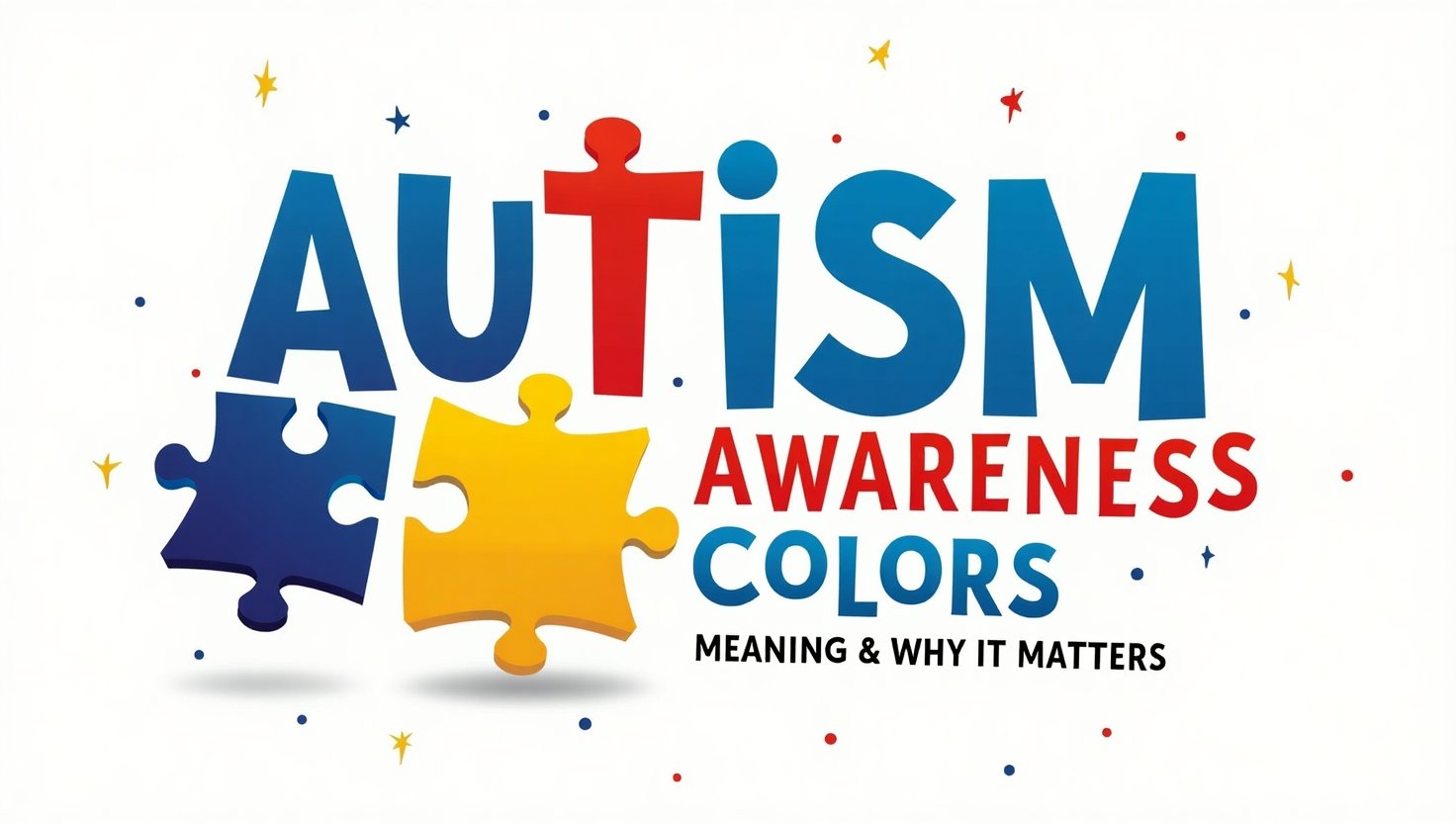
Autism Awareness Colors are more than just eye-catching shades—they tell a story of acceptance, diversity, and advocacy. Have you noticed how blue lights up buildings every April or how puzzle pieces and rainbow-colored ribbons appear in social media posts? These colors and symbols are chosen with purpose and carry powerful meanings.
Blue is the most widely recognized autism awareness color, representing calmness, acceptance, and understanding. The puzzle piece with red, yellow, blue, and green shades stands for the complexity and variety within the autism spectrum. Recently, the rainbow infinity symbol has gained popularity, symbolizing neurodiversity and limitless potential.
Curious why some groups have moved away from the puzzle piece or embraced the infinity loop instead? Wondering how each color connects to the autism community? Let’s explore the deeper meaning behind these symbols and discover how they’re shaping modern autism advocacy.
What Are Autism Symbols and Colors?
Autism symbols and colors are visual representations that help promote understanding and support for individuals with autism spectrum disorder (ASD). They serve as a way to communicate the need for inclusion and acceptance, and each color and symbol has a unique meaning.
These visual markers help raise awareness about the abilities and challenges faced by people on the autism spectrum while highlighting their strengths and talents.
Autism awareness colors and symbols are used in various campaigns, events, and community efforts to make the world more aware of the needs of individuals with autism.
How Can You Celebrate World Autism Awareness Day?
World Autism Awareness Day, observed on April 2nd each year, is a global event aimed at increasing understanding of autism and promoting acceptance for individuals on the spectrum. There are many ways to get involved and show your support, and one of the most visible ways to participate is by embracing the autism awareness colors and symbols. Here are some ways you can celebrate:
- Wear Blue: As part of the “Light It Up Blue” initiative, many people wear blue clothing or accessories to raise awareness and show solidarity.
- Share Information: Use social media to share educational content, personal stories, or facts about autism to help spread understanding.
- Organize or Participate in Events: Whether it’s a local walk, an online seminar, or a fundraising event, getting involved in community activities can make a significant impact.
- Support Autism-Friendly Businesses: Look for businesses that promote inclusion and offer employment opportunities for individuals with autism.
By participating in these activities, you contribute to the broader mission of raising awareness and fostering acceptance for people with autism.
Autism Awareness Colors & Symbols Meaning:
– Light It Up Blue
One of the most recognizable symbols associated with autism awareness is the “Light It Up Blue” campaign, which encourages people to wear blue during April in support of individuals with autism. The color blue was chosen because it represents calmness and understanding, helping to convey the message that people with autism deserve acceptance and inclusion. This campaign has gained significant traction globally, with landmarks and buildings lighting up in blue to show solidarity.
– The Rainbow Spectrum
Another prominent symbol for autism awareness is the rainbow-colored puzzle piece. The rainbow spectrum represents the diversity of individuals on the autism spectrum, emphasizing that no two people with autism are the same. The puzzle piece itself is symbolic of the complexity of autism, with many pieces coming together to form a complete picture. The rainbow spectrum is often used to show the colorful, multifaceted nature of autism and the spectrum of experiences that exist within the community.
– The Butterfly Symbol
The butterfly symbol represents transformation, hope, and growth, making it an ideal symbol for autism awareness. The butterfly’s metamorphosis serves as a powerful metaphor for the journey many individuals with autism face—one of growth, change, and self-discovery. This symbol is often used to promote understanding, acceptance, and the potential for individuals with autism to thrive in a supportive environment.
What is the Infinity Symbol for Autism?
The infinity symbol, often seen alongside the rainbow colors, is another important symbol in the autism community. The infinity symbol represents the infinite possibilities that individuals with autism possess.
It also highlights the infinite spectrum of experiences, behaviors, and traits that people with autism can have. The use of this symbol emphasizes that there are no limits to what individuals with autism can achieve when given the right support, opportunities, and understanding.
Autism Acceptance vs Awareness
While both autism awareness and autism acceptance are crucial for creating a more inclusive society, it is important to distinguish between the two. Autism awareness focuses on educating the public about autism, its characteristics, and the challenges faced by individuals on the spectrum. It is about making people aware of autism’s existence and encouraging empathy.
On the other hand, autism acceptance goes a step further by promoting understanding, inclusion, and support for individuals with autism. Acceptance involves not just acknowledging autism but actively working towards creating an environment where people with autism can thrive. This means challenging societal misconceptions, addressing stigma, and ensuring that individuals with autism have equal opportunities to succeed.
Key Differences Between Autism Awareness and Acceptance
| Aspect | Awareness | Acceptance |
|---|---|---|
| Focus | Learning about autism and its characteristics | Embracing autism as a valid form of neurodiversity |
| Goal | To inform the public about autism | To create an inclusive society where autistic people are respected and supported |
| Outcome | Understanding the basic facts about autism | Fostering empathy, respect, and inclusion for autistic individuals |
| Action | General education and awareness campaigns | Active support, policy changes, and cultural shifts towards inclusion |
| Language | May emphasize deficits or challenges | Emphasizes strengths and unique qualities of autistic individuals |
| Scope | Often leads to short-term educational initiatives | Focuses on long-term, systemic changes in society |
The Importance of Assessment for Autism Spectrum Disorder
Early assessment and diagnosis of autism spectrum disorder (ASD) are critical for providing individuals with the best chance for success. An early diagnosis allows for timely intervention, which can help improve social, communication, and behavioral skills. It also provides families with the resources they need to better understand and support their loved ones. The assessment process typically involves a team of professionals, including psychologists, speech therapists, and developmental pediatricians, who work together to determine the best course of action for each individual.
Autistic People vs. People with Autism
The terminology used to describe individuals with autism has evolved over time, and it is important to use language that respects the preferences of the autism community. The term “autistic person” places the identity of autism as an integral part of the individual, recognizing that it is a key aspect of who they are. Many self-advocates in the autism community prefer this term, as it acknowledges the unique experiences and strengths of being autistic.
Conversely, the term “person with autism” focuses more on the individual as a person first, with autism being one aspect of their identity. Both terms are widely used, but it is essential to respect the preferences of individuals and communities when choosing the appropriate language. As society continues to shift towards greater acceptance of neurodiversity, the language used to describe individuals with autism will continue to evolve.
Commonly Asked Questions about Autism Colors & Symbols Meaning (FAQs)
What does the puzzle piece mean for autism?
The puzzle piece symbol is used to represent autism, symbolizing complexity and diversity. Some in the autism community embraces neurodiversity, while others prefer alternative symbols like the infinity loop.
How You Can Promote Autism Awareness?
Promote awareness by sharing facts, wearing the autism awareness ribbon, supporting inclusive events, and listening to voices within the autism community. Advocacy and education reduce stigma.
What are the types of autism symbols?
Common symbols include the puzzle piece (to represent autism), rainbow infinity loop (neurodiversity), and autism awareness ribbon. Choices vary within the autism community based on personal preference.
Why ABA Therapy is the Best Weapon Against Low Expectations?
ABA therapy helps children with autism build skills and independence, challenging stereotypes. It’s evidence-based and tailored to individual needs, fostering growth and confidence.
What color is autism awareness?
Light blue is traditionally used to represent autism awareness, linked to the autism awareness ribbon. Some now use rainbow colors to reflect neurodiversity within the autism community.
What color is for autism awareness?
The autism awareness ribbon is light blue, but gold (for acceptance) and rainbow hues are also used to represent neurodiversity within the autism community.
Is there a color for autism awareness?
Yes—light blue is classic, but gold and multicolor designs also support autism awareness. The autism awareness ribbon evolves to reflect diverse views within the autism community.
What is the autism awareness color?
Light blue is the traditional color used to represent autism, tied to the autism awareness ribbon. Neurodiversity advocates also use gold or rainbow shades to promote awareness.
What Is the Official Autism Awareness Color?
Blue is the most recognized autism awareness color. It gained popularity through Autism Speaks – “Light It Up Blue” campaign. Many landmarks and buildings glow blue each April to honor World Autism Awareness Day. Blue stands for calmness, acceptance, and support.
Color for Autism Conclusion
The use of autism awareness colors and symbols is a powerful tool in the ongoing efforts to raise awareness, promote acceptance, and advocate for the rights of individuals with autism. By understanding the meaning behind these diverse range colors and symbols, you can contribute to a more inclusive society where individuals on the autism spectrum are respected, supported, and given the opportunity to thrive.
Whether it is through wearing blue on World Autism Awareness Day, participating in local events, or simply learning more about the challenges faced by those with autism, every small action counts. Let’s continue to use Autism Awareness Colors and symbols to spark conversations, foster understanding, and create a world that celebrates neurodiversity.
You might also read
- Autism Hyperlexia in Children: Signs, Challenges & Treatment
- What Is Autism Scripting? The Hidden Communication Style
- Best Picture Books for Preschoolers with Autism (Top Picks)
- Is Walking on Tip Toes a Sign of Autism or Something Else?
- Level 1 Autism Spectrum Disorder (Symptoms and Treatment)
- 7 Benefits of Horse Therapy for Autism (Exclusive Guide)
- Can Mild Autism Go Away with Age? What the Research Tells Us

