Worried about how to get toddler to talk? Are you constantly asking questions, reading books, and playing with them—yet their words just aren’t coming? If you’re feeling anxious or unsure, you’re not alone.
This article breaks down simple, proven strategies to help boost your toddler’s speech. From narrating daily activities to encouraging choices with words, these tips are both practical and fun. You’ll also learn when it might be time to seek help from a speech-language expert.
Leading speech pathologist Laura Mize, known for her work on early language development, emphasizes the power of parent interaction in jumpstarting toddler speech. Ready to unlock your child’s voice? Let’s get talking—together!
When Should Babies Start Talking?
Typically, babies begin to babble around the age of 4 to 6 months, and by their first birthday, many will say their first words such as “mama” or “dada.” By 18 months, toddlers often have a vocabulary of about 10 to 25 words and can start to combine words together to form simple phrases.
By the time they reach 2 years old, most toddlers will be able to speak in short sentences and understand simple instructions. It’s important to note that every child is different; some may start talking earlier while others may take a bit longer to reach these milestones.
Keeping an open line of communication with your pediatrician can help track your child’s progress and ensure they are developing appropriate language skills.
As you observe your little one, remember that early communication skills can vary significantly. While some children may quickly progress to speaking in sentences by the age of 3, others might still be developing their vocabulary. Listening for new words and encouraging your toddler to express themselves can make a significant difference.
If your toddler isn’t talking by 18 months, it may be beneficial to engage in more interactive play and speak clearly during daily activities. It’s essential to provide a rich language environment to help your child learn to talk and to ensure they are on a positive trajectory for language development.
Why it’s Important for Babies and Toddlers Language Development?
Language development is vital for babies and toddlers as it directly influences their ability to communicate thoughts, needs, and emotions. Strong language skills are linked to academic success and social relationships later in life.
When children learn to talk and understand language, they can express themselves more clearly, which leads to improved interactions with parents, peers, and teachers. Furthermore, language development also supports cognitive skills, as children learn to categorize and understand the world around them through words.
Encouraging language skills from an early age can also help prevent future speech delays. Engaging activities such as singing, reading to your toddler, and encouraging them to use words in daily situations can greatly enhance their vocabulary and communication abilities.
When children can express themselves and understand others, they are less likely to experience frustration, which can often lead to behavioral issues. Thus, investing time in language development is essential not only for immediate communication but also for long-term emotional and social health.
How to Get Toddler to Talk and Understands Words?
To help your toddler talk, it’s important to create an environment that encourages communication. One effective strategy is to play with your toddler regularly, as play is a natural way for children to express themselves. Use toys and games that require interaction, and model language by naming objects or describing actions.
Additionally, engaging in storytelling or reading books together can introduce new words and concepts that stimulate your toddler’s interest in language. Don’t forget to give your toddler plenty of opportunities to respond and encourage them to use words rather than gestures.
You can also teach your toddler to talk by incorporating sign language into your interactions. This method not only aids in communication but also enhances their understanding of language. Use simple signs for common words like “more” or “please,” allowing your child to express their needs.
Additionally, limit screen time and encourage more face-to-face interactions, as this can significantly impact your toddler’s language skills. The more they see and hear language in context, the more likely they are to replicate it, building their confidence as a talker.
10 Proven Strategies to Help Boost Your Toddler’s Speech
Helping your toddler develop strong speech and language skills can be incredibly rewarding—and there are lots of proven, parent-friendly strategies to support this journey. Here are some effective methods backed by speech-language pathologists and child development research:
🗣️ 1. Talk, Talk, Talk (Even If They Can’t Yet!)
Narrate your day. Describe what you’re doing as you go:
“I’m pouring your milk. Now I’m putting on your shoes.”
This constant exposure to language helps your child learn words in context.
📚 2. Read Together Every Day
Reading exposes toddlers to new vocabulary and sentence structures.
Try:
- Pointing to pictures and naming them.
- Asking questions like, “Where’s the dog?” or “What’s she doing?”
Bonus tip: Choose interactive books with textures, flaps, or rhymes.
🧩 3. Pause to Let Them Speak
After asking a question or making a comment, pause—even if it feels awkward at first. This gives them time to process and respond.
Try:
- “Do you want the ball… or the car?” (pause)
- “It’s your turn!” (pause)
🎵 4. Sing Songs & Nursery Rhymes
Songs have rhythm and repetition, which boost memory and language skills. Sing favorites like “Itsy Bitsy Spider” or make up silly songs about what you’re doing!
👀 5. Get on Their Level
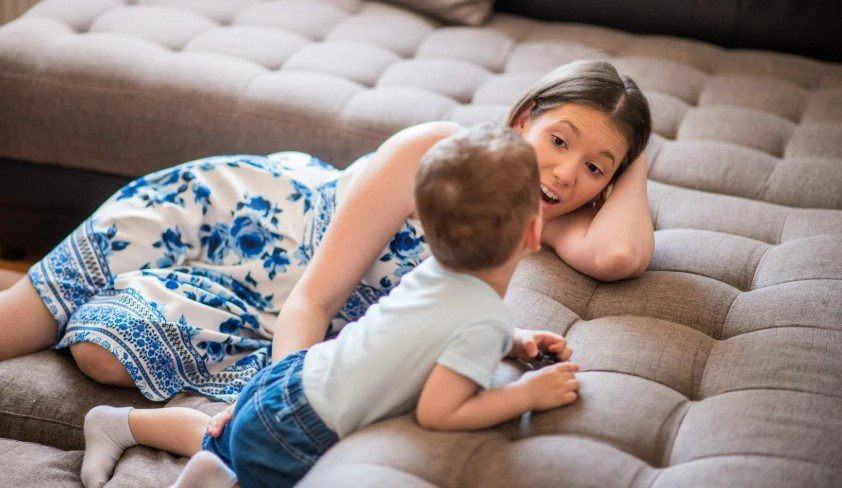
Sit or kneel to be face-to-face with your toddler during play or conversation. This builds connection and helps them see how words are formed.
🎯 6. Follow Their Lead
Talk about what they’re interested in rather than directing the play. If your child is stacking blocks, say:
- “You’re building a tower!”
- “Wow, that one’s big!”
This encourages meaningful, engaging interaction.
🧠 7. Use Simple, Clear Language
Use short, correct sentences just a bit more advanced than your child’s current speech. If they say “doggy run,” you might say, “Yes! The dog is running fast!”
✋ 8. Limit Screen Time, Maximize Real Talk
Interactive play and conversation are much more powerful for language development than passive screen watching—especially under age 3.
🧸 9. Play, Play, Play!
Play is a toddler’s best learning tool. Use pretend play to introduce new vocabulary:
- Doctor kits: “Let’s check your heartbeat.”
- Play food: “Cut the banana. Yum!”
🤗 10. Celebrate All Efforts
Whether they’re babbling or forming short phrases, every attempt is a step forward. Encourage with smiles, praise, and repeating what they say (even if it’s not clear).
How Do You Know if Your Child Needs Speech Therapy?
Recognizing the signs of a potential speech delay is crucial for early intervention. If your toddler isn’t talking by 18 months or has a limited vocabulary compared to peers, it may be time to consider speech therapy.
Other warning signs include difficulty understanding simple instructions, not using gestures to communicate, or not combining words into simple sentences by age 2.
If your child is babbling but isn’t progressing to using words, this could indicate a need for professional help. Paying attention to how well your child communicates can provide insights into their language development.
Additionally, if your toddler struggles to imitate sounds or has difficulty pronouncing words clearly, these could be red flags. A child who doesn’t respond to their name or appears uninterested in verbal interactions may also benefit from seeing a speech-language pathologist.
Early intervention can significantly impact your child’s communication skills and overall language development. If you’re concerned, discussing your observations with your pediatrician can help determine the best course of action for your child.
When to seek help from a Speech – Language Pathologist?
Seeking help from a speech-language pathologist (SLP) is advisable if you notice persistent challenges in your toddler’s communication skills. If your child isn’t talking at all by 2 years old or has trouble expressing themselves verbally, it is important to consult an SLP.
Additionally, if your toddler is only using a few words or not using words together by 3 years old, professional evaluation may be necessary. Early intervention is crucial, as it can significantly benefit your child’s speech and language development.
Furthermore, if your child exhibits unclear speech that affects their ability to be understood, or if they show frustration when attempting to communicate, these are also signs that they may need support.
A speech-language pathologist can assess your child’s communication abilities and provide tailored strategies to help them improve their language skills. The sooner you seek help, the better the chances are for your child to catch up with their peers and develop effective communication skills.
How to Find a Speech Therapist?
Finding the right speech therapist for your toddler can make a significant difference in their language development journey. Start by asking your pediatrician for recommendations, as they often have a network of trusted professionals in your area.
You can also research local speech-language pathologists who specialize in working with young children. Look for therapists who have experience with toddlers and who use evidence-based techniques to encourage language development and engagement.
When searching for a speech therapist, consider checking online directories or local healthcare facilities that offer speech therapy services. It’s also beneficial to read reviews or testimonials from other parents.
Once you have a few potential candidates, don’t hesitate to reach out and ask about their approach to therapy, experience with toddlers, and availability. Ensuring that the therapist is a good fit for your child’s personality and needs is essential for a successful therapy experience.
Commonly Asked Questions about teach Your Toddler to Talk (FAQs)
What are some easy tips to get your toddler talking?
How to get my toddler to talk? To get your child talking, engage them in conversations, use picture books, and narrate daily activities. Encourage your child to express themselves by asking open-ended questions and giving them time to respond.
How does screen time affect my toddler’s talking skills?
Excessive screen time can limit your toddler’s opportunities for interaction, which is crucial for developing language skills. It’s important to balance screen time with actual communication and playtime.
My son is 2 years old and isn’t talking yet. What should I do?
If your son is 2 years old and not talking yet, focus on encouraging him to use simple words and sounds. Engage him in activities that promote language development, and consult a pediatrician if you have concerns about language delays.
How can I help my child understand and say the word “more”?
To help your child say the word “more,” model the word during playtime and mealtime. When they show interest in wanting more of something, encourage them to say the word by prompting them gently.
What should I do if my child understands everything but isn’t talking?
If your child understands everything but isn’t talking yet, continue to engage them in conversations and provide opportunities for them to express themselves. You can also use sign language to facilitate communication.
How can I encourage my child to ask questions about the pictures in books?
To encourage your child to ask questions about pictures in books, pause frequently during reading and prompt them with questions like, “What do you think is happening here?” This can help stimulate their curiosity and expressive language.
Are there specific language milestones I should be aware of for my toddler?
Yes, toddlers typically reach specific language milestones such as saying their first words by 12 months, using two-word combinations by 24 months, and having a vocabulary of about 50 words. However, every child develops at their own pace.
How can I help parents to use effective strategies for getting their toddler to talk?
Parents can help their toddlers develop language by engaging in meaningful conversations, providing a rich language environment, and being patient. Encouraging play and interaction can also motivate toddlers to express themselves verbally.
What should I do if I suspect my child has an expressive language delay?
If you suspect your child has an expressive language delay, observe their communication attempts and consult a speech-language pathologist for an evaluation. Early intervention can be very beneficial for children who aren’t meeting their language milestones.
Conclusion
So, how to help toddler talk? Encouraging your toddler to talk and communicate effectively is an essential aspect of their development. By understanding when babies start talking, the importance of language development, and how to stimulate your toddler’s communication skills, you can take proactive steps to support their growth. Always be mindful of any signs that may indicate a speech delay, and don’t hesitate to seek help from a professional if needed. Remember, every child develops at their own pace, and your involvement plays a crucial role in helping your little one learn to talk. With patience, practice, and the right strategies, you can foster a positive language environment that encourages your toddler to become a confident talker.
You might also like
- Toddler Talking in Sleep: What’s Normal & When to Worry?
- 10 Phrases to Use When Your Toddler Doesn ‘T Listen!
- 2 Year Old Not Talking but Understands: Speech Delay or Just Late Bloomer?