Physical development in early childhood shapes how children move, explore, and interact with the world. From learning to crawl to mastering balance and coordination, these changes happen rapidly between birth and age eight. How do these physical milestones influence lifelong health, confidence, and learning outcomes?
Physical development of preschoolers follows predictable patterns that include gross motor skills, fine motor control, strength, and physical growth. Children typically progress from basic movements like sitting and walking to complex skills such as running, drawing, and self-care tasks. Growth standards published by the World Health Organization confirm that these early years set the foundation for physical competence and overall well-being.
Yet physical growth involves more than height and weight charts. Renowned child development expert Jean Piaget emphasized that children learn through active movement and hands-on interaction with their environment. So, what factors accelerate healthy physical child’s development, and what warning signs should caregivers watch for? Let’s examine the science, expert insights, and practical strategies that guide strong physical and motor development in early childhood.
Physical Development in Early Childhood Overview
Children’s physical development in early childhood refers to the systematic progression of bodily growth, motor skills, sensory integration, and physiological regulation that occurs from infancy through the early elementary years. This domain encompasses both physical growth (changes in size, proportion, and body composition) and motor development (the acquisition of movement skills and coordination).
Developmental theorists such as Jean Piaget, Arnold Gesell, and contemporary neurodevelopmental researchers emphasize that physical development during childhood is biologically driven yet highly influenced by environmental conditions, including nutrition, physical activity, caregiving quality, and access to stimulating experiences. During early childhood, neural pathways are rapidly forming, making this period particularly sensitive to both positive stimulation and developmental risk factors.
Importantly, physical development during childhood is interconnected with cognitive, social, and emotional development. A child’s ability to explore their environment physically directly supports problem-solving, language acquisition, self-regulation, and social interaction. Therefore, supporting physical and motor development skills is not an isolated goal but a cornerstone of holistic early childhood development.
What are the Major Physical Development Milestones?
Physical development milestones provide structured reference points that indicate typical patterns of growth and motor skill acquisition. While individual variation is normal, these milestones help caregivers and professionals monitor progress and identify potential developmental concerns early.
Physical Growth in Early Childhood
Physical growth during early childhood follows predictable biological patterns influenced by genetics and health-related factors. Key characteristics include:
- Rapid growth during infancy, followed by steadier growth throughout toddlerhood and preschool years
- Significant increases in height and weight, with proportional changes in body composition
- Skeletal growth accompanied by increased bone density and muscle strength
- Development of internal systems, including cardiovascular, respiratory, and digestive systems
Nutrition plays a central role during this phase. Adequate intake of protein, calcium, iron, and essential vitamins supports healthy bone formation, muscle development, and energy regulation. Chronic undernutrition or illness during early childhood can have lasting impacts on physical growth trajectories.
Gross Motor Skill Development
Gross motor skills involve the large muscle groups responsible for posture, balance, locomotion, and whole-body movement. These skills develop sequentially and include:
- Head and trunk control
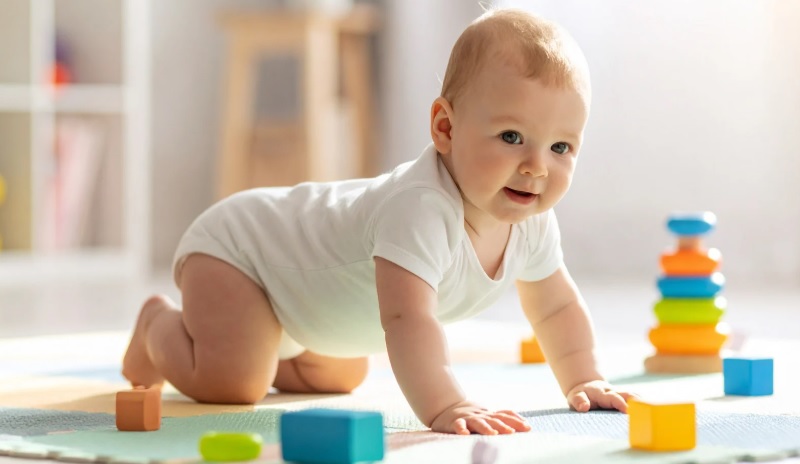
- Sitting, crawling, and standing
- Walking, running, and jumping
- Climbing, throwing, kicking, and balancing
As children progress through early childhood, gross motor movements become more coordinated, controlled, and purposeful. By preschool age, children typically demonstrate improved balance, agility, and endurance, enabling participation in structured physical play and early sports-related activities.
Examples of Physical Development in Early Childhood: Infants & Babies
Physical development skills begins at birth and progresses rapidly throughout infancy. Early examples include reflexive movements, voluntary motor control, and sensory-motor integration.
In the first year of life, infants typically demonstrate:
- Lifting and turning the head while lying prone
- Rolling over from front to back and back to front
- Sitting independently and transitioning between positions
- Crawling, scooting, or creeping
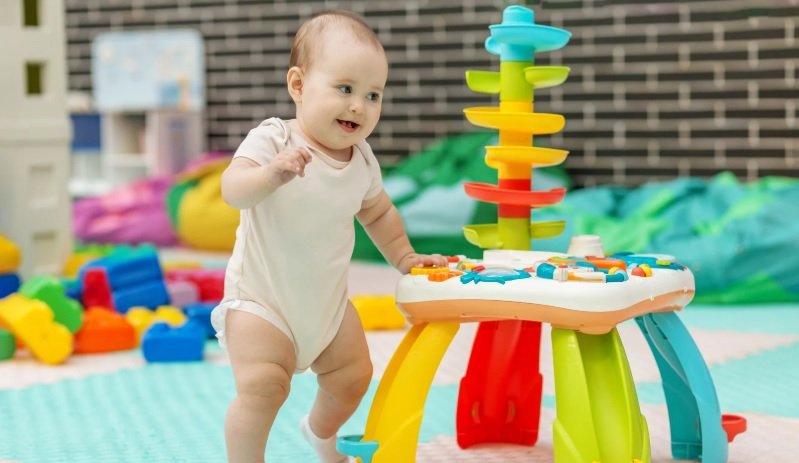
- Pulling to stand and cruising along furniture
- Taking first independent steps
Fine motor development also emerges during infancy, including grasping objects, transferring items between hands, and early hand-eye coordination. These motor skills support exploration, sensory learning, and early cognitive development.
Physical development in infancy is heavily influenced by responsive caregiving. Safe floor time, supervised tummy time, and opportunities for movement are essential for strengthening muscles and encouraging motor progression.
How to Support Physical Development in Early Childhood
Supporting physical development requires intentional environments, responsive caregiving, and developmentally appropriate opportunities for movement and exploration. Effective strategies include:
- Providing daily opportunities for active play and movement
- Ensuring balanced nutrition and adequate hydration
- Establishing consistent sleep routines to support growth and recovery
- Creating safe, open spaces for physical exploration
- Limiting prolonged sedentary behaviors, particularly screen exposure
Adult engagement is also crucial. Encouraging children through verbal reinforcement, modeling active behavior, and adapting activities to individual skill levels fosters confidence and motivation. For children with developmental delays or disabilities, early intervention services and collaboration with healthcare professionals can significantly improve outcomes.
Physical Development Activities for Toddlers
Toddlers are in a dynamic phase of physical development marked by increasing independence and mobility. Developmentally appropriate activities should emphasize repetition, exploration, and enjoyment.
Effective physical development activities for toddlers include:
- Walking on uneven surfaces to improve balance
- Pushing and pulling toys to strengthen core and leg muscles
- Climbing age-appropriate structures under supervision
- Dancing and movement games that promote coordination
- Ball play, including rolling, throwing, and kicking
These activities support not only gross motor development but also spatial awareness, coordination, and early self-regulation. Importantly, toddler physical activity should be unstructured and play-based, allowing children to explore movement at their own pace.
Physical Development Resources for Infant and Toddlers
High-quality resources can support caregivers and educators in promoting optimal physical development during childhood. Evidence-based resources include:
- Pediatric growth charts and developmental screening tools
- Early childhood physical activity guidelines from health organizations
- Parent education programs focused on motor development
- Community playgroups and early learning centers
- Occupational and physical therapy services when needed
Books, professional training programs, and reputable early childhood development websites can further enhance understanding and practical application. Selecting resources grounded in developmental science ensures that interventions are both effective and age-appropriate.
Commonly Asked Questions about Physical Changes in Early Childhood (FAQs)
How to support children physical development in early childhood?
Support physical development by providing daily active play. Encourage running, jumping, and climbing to build gross motor skills. Offer crayons, puzzles, and safe objects to grasp for fine motor skills. Ensure a safe space to explore and always supervise activities.
What are typical physical development milestones in early childhood?
Typical physical development milestones in early childhood include rolling, sitting, crawling, walking, running, jumping, and improving fine motor skills like grasping and using utensils. Growth and development rates vary; monitoring gross and fine motor progress helps identify physical challenges early and supports physical motor development.
How can caregivers promote fine motor skills throughout early childhood?
Caregivers can promote fine motor skills throughout early childhood by offering play with blocks, drawing, threading beads, using utensils, dressing. Structured physical games encourage hand-eye coordination, support brain development, link to early literacy and language development while addressing various areas of development and social growth.
When should parents worry about delays in gross and fine motor development?
Parents should seek assessment if a child shows persistent delays in gross and fine motor skills, such as failing expected age-range abilities, or poor hand coordination beyond development milestones in early childhood; early intervention improves later development and reduces physical challenges and supports physical abilities.
How do physical and cognitive development interact in early child growth?
Physical and cognitive development interact as movement supports brain development; exploration, play, and physical skills like crawling and ball back and forth activities stimulate neural connections, aid language development, and foster early literacy. Sensorimotor experiences link stages of development and shape later development across social-emotional.
What role do physical games play in toddler development?
Physical games in toddler development promote balance, coordination, social development, and physical abilities. Activities such as running, jumping, tossing a ball back and forth, and imaginative play encourage growth and development, help reach development milestones in early childhood, and prepare children for middle childhood demands.
How does childhood experience affect later development and emotional health?
Childhood experiences influence later development and emotional health by shaping brain development, self-regulation, physical, emotional responses. Positive nutrition, movement, secure relationships, and stimulating play support growth development, while unresolved physical challenges or stress in early childhood may hinder later development and social functioning.
How should educators monitor physical development milestones in early childhood?
Educators should monitor physical development milestones in early childhood through observations and screening tools, tracking gross and fine motor skills. Communicate with families, adapt classroom activities to strengthen physical abilities and physical and cognitive interactions, and refer to specialists when persistent physical challenges appear promptly.
Can sexuality begins in childhood be addressed when discussing physical development?
Yes, sexuality begins in childhood and can be addressed within discussions of physical development by teaching body awareness, boundaries, and appropriate touch. Age-appropriate information supports healthy development, links to physical and emotional growth, and helps prevent abuse, reflecting the importance of physical and social development.
Summarize Overall Physical Growth During Early Childhood
Physical development during early childhood is a complex, multifaceted process that shapes a child’s capacity for movement, learning, health, and independence. From the rapid growth of infancy to the refined motor coordination of the preschool years, early physical development establishes the biological framework for lifelong functioning.
By understanding developmental theory, recognizing key milestones, and implementing supportive strategies, caregivers and professionals can significantly enhance physical outcomes during this critical period. Intentional support for physical growth and motor development not only promotes immediate well-being but also contributes to long-term cognitive, emotional, and social success.
In sum, investing in physical development during early childhood is an investment in the whole child—one that yields enduring benefits across the lifespan.
Recommended posts
- The 30 Month Developmental Milestones Checklist and Tips
- How Family Effects on Human Development and Why it Matter?
- Can Childhood Asthma Go Away Over Time? (Expert Insights)
- The Complete Fifteen Month Old Milestones Checklist & Red Flags