When your little one reaches their first birthday, the world suddenly becomes an exciting playground of touch, taste, sound, and color. Sensory Activities for One Year Olds are more than just fun — they’re essential for building a strong foundation in brain development, coordination, and communication.
Through sensory play, toddlers explore textures, experiment with movement, and begin understanding cause and effect — all while developing the emotional and cognitive skills that prepare them for future learning.
Below, you’ll discover nine engaging sensory activities for 1-year-olds, designed to promote healthy development while keeping playtime safe, interactive, and full of joy.
Why Edible Sensory Play Matters?
Edible sensory play is an exciting way to introduce various textures, tastes, and smells to infants. At one year old, children are naturally curious and eager to explore their environment through all their senses. Edible sensory activities allow them to experiment safely, promoting exploration without the risk of harmful substances.
Moreover, edible sensory play can encourage healthy eating habits by familiarizing children with different food textures and flavors. When children interact with food creatively, they are more likely to develop a positive relationship with it.
This type of play also supports fine motor skills as babies grasp, manipulate, and explore food items. In essence, edible sensory play lays a foundation for healthy eating and sensory exploration.
9 Sensory Activities for One Year Olds That Build Cognitive Skills
Of course! This is a fantastic age for sensory play, as one-year-olds are little scientists, using their senses to understand the world. The key is to focus on activities that are safe, simple, and open-ended.
Here are Nine Sensory Activities for 1 Year Olds that are fun and secretly build crucial cognitive skills.
1. Rainbow Rice Sensory Bin
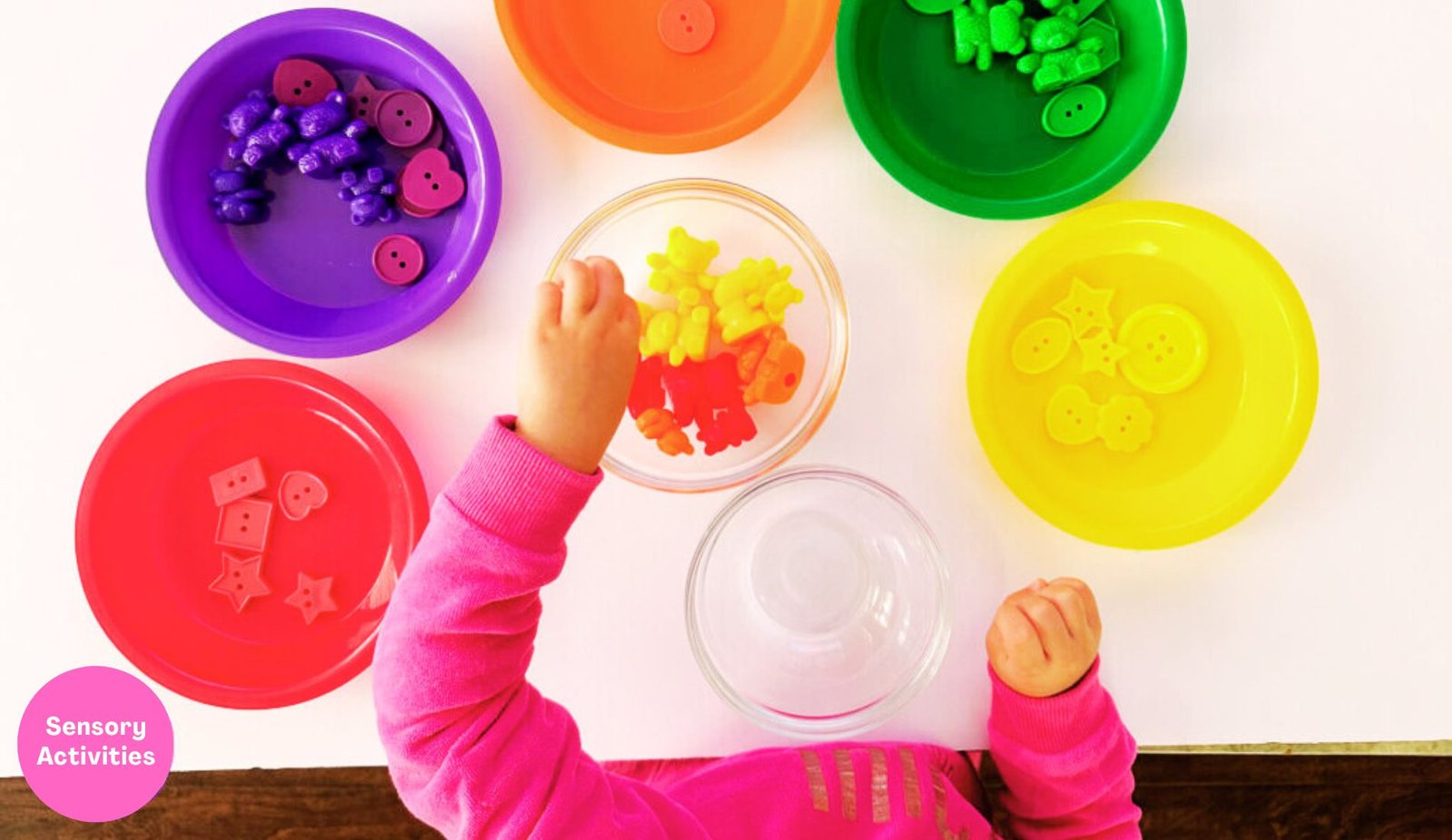
Create a vibrant sensory bin filled with colored rice. To make rainbow rice, simply dye uncooked rice using food coloring. Provide scoops, cups, and small toys for an engaging experience. This activity not only stimulates visual senses but also encourages pouring and measuring, promoting fine motor skills and hand-eye coordination.
2. Water Play with Cups and Toys
Fill a shallow container with warm water and provide various cups and waterproof toys. This classic sensory activity allows one-year-olds to splash, pour, and float items, enhancing their understanding of cause and effect. Water play also introduces concepts like full and empty, as well as buoyancy.
3. Edible Finger Paints
Combine yogurt with food coloring to create safe edible finger paints. Allow your child to explore their creativity on a large piece of paper. This activity engages their sense of touch and sight while encouraging creativity. Plus, it’s completely safe if they decide to taste their masterpiece!
4. Sensory Bags
Create sensory bags using zip-close plastic bags filled with hair gel, glitter, or small toys. Seal the bags tightly and let your child squish and manipulate them. This activity promotes tactile exploration and is perfect for developing fine motor skills while being mess-free.
5. Texture Exploration with Cloths
Gather various fabric swatches (silk, cotton, burlap, etc.) and allow your child to explore different textures. This activity can enhance sensory discrimination and promote language development as you describe each fabric. Incorporate words like “soft,” “rough,” and “smooth” to enrich their vocabulary.
6. Play Dough Fun
Homemade play dough is a fantastic sensory material. Encourage your child to squish, roll, and mold the dough. This activity strengthens hand muscles and boosts creativity. You can add scents like vanilla or citrus to enhance the sensory experience further.
7. Nature Sensory Walk
Take a stroll outside and collect various natural items like leaves, pinecones, and flowers. Back home, create a sensory table where your child can explore the textures and smells of the items. Discussing the colors and shapes will enhance cognitive skills and vocabulary.
8. Bubble Wrap Stomp
Lay out bubble wrap on the floor and let your child stomp on it. The sound and sensation of popping bubbles provide a thrilling sensory experience. This activity enhances gross motor skills and introduces concepts like loud and quiet.
9. Cooking Together
Involve your one-year-old in simple cooking tasks, such as mixing batter or mashing bananas. This not only fosters a connection with food but also enhances sensory exploration through taste, smell, and texture. Cooking together can also strengthen your bond and create lasting memories.
What Cognitive Skills Should a 1 Year Old Have?
By the age of one, children are rapidly developing cognitive skills. Key skills typically include:
- Object Permanence: Understanding that objects continue to exist even when out of sight. This skill can be fostered through peekaboo games.
- Cause and Effect: Grasping that their actions can produce reactions, such as shaking a rattle to create sound.
- Problem-Solving: Figuring out simple challenges, like crawling to reach a toy.
- Language Development: Recognizing familiar words and phrases, beginning to understand simple instructions, and imitating sounds.
These skills are crucial for further learning and development. Engaging in sensory activities can significantly enhance these cognitive abilities, making exploration and play essential components of their growth.
Benefits of Sensory Play for Infants and Toddlers
The benefits of sensory play for 1 year olds extend beyond immediate entertainment. Here are several key advantages:
- Promotes Cognitive Development: Engaging with different materials fosters curiosity and enhances problem-solving skills.
- Enhances Motor Skills: Sensory play often involves activities that strengthen fine and gross motor skills, which are essential for later tasks like writing and self-feeding.
- Supports Language Skills: Describing sensory experiences helps expand vocabulary and encourages communication.
- Stimulates Social Interaction: Group sensory activities foster cooperation and sharing, essential for developing social skills.
- Encourages Emotional Regulation: Exploring various textures and sensations can help babies learn to manage their emotions and reactions.
- Fosters Creativity: Sensory play opens the door to imaginative play, encouraging children to express themselves and think creatively.
- Builds Confidence: Successfully navigating sensory experiences boosts self-esteem and encourages a sense of accomplishment.
Incorporating sensory activities into your one-year-old’s routine can provide a solid foundation for future learning and development while also being fun and engaging.
Commonly Asked Questions about Sensory Play Activities for Toddlers (FAQs)
What are sensory activities for one year olds?
Sensory activities for one year olds are play experiences that engage a child’s senses, such as touch, sight, sound, taste, and smell. These activities help to promote cognitive development, fine motor skills, and language development while allowing little ones to explore different textures and materials in a safe and fun way.
Why are sensory play activities important for toddlers?
Sensory play activities are crucial for toddlers as they aid in brain development and help children make sense of their environment. Engaging in sensory experiences allows them to explore various textures and smells, enhancing their problem-solving skills and cognitive abilities while also improving their hand-eye coordination.
What are some simple sensory activities for one year olds?
Favorite sensory activities for one year olds include creating a sensory bin filled with items like cotton balls, water beads, or edible materials like cheerios. Other activities can involve water play with measuring cups, or making homemade finger paint using safe ingredients that allow for creative expression and exploration.
Can you provide examples of edible sensory play?
Edible sensory play includes activities like creating oobleck, which is made from cornstarch and water, or using taste-safe sensory play options like tapioca pearls. These simple activities not only engage the senses but are also safe for babies who tend to put things in their mouths.
How do sensory play ideas help with fine motor skills?
Sensory play ideas, such as scooping and pouring activities with a sensory bin, are excellent for developing fine motor skills in one year olds. These activities encourage the use of small muscles in the hands and fingers, enhancing dexterity and coordination as toddlers manipulate different objects.
What are some fun sensory play ideas for one year olds?
Fun sensory play ideas for one year olds can include creating a sensory bottle filled with colorful water and glitter, or a sensory bag filled with different textures like fabric and foam. These activities provide exciting sensory stimulation and encourage exploration through play.
How can sensory activities support a child’s development?
Sensory activities support a child’s development by promoting brain development and enhancing cognitive skills. Through sensory play, children learn about different textures, colors, and smells, which helps them build language skills and understand their surroundings better.
What is the best sensory activity for one year olds?
The best sensory activity for one year olds often depends on the child’s interests, but many kids love engaging with water play or creating a sensory bin filled with vibrant and safe materials. These activities not only provide fun sensory experiences but also encourage exploration and learning.
Conclusion
Sensory Activities for One Year Olds are far more than simple play; they’re powerful tools for stimulating brain growth, emotional well-being, and lifelong learning. From edible experiments to outdoor texture adventures, each activity nurtures curiosity and creativity in a safe, age-appropriate way.
By integrating sensory play into your daily routine — whether during bath time, snack time, or outdoor walks — you’re giving your child the foundation for strong cognitive, motor, and emotional development. Remember: the messier the play, the greater the learning.
So, roll up those sleeves, grab a bowl of spaghetti or a tray of yogurt paint, and dive into the world of fun, stimulating sensory experiences that help your little one grow, thrive, and explore the world with all their senses.
Recommended posts
- 10 Simple Yet Powerful Learning Activities for 2 Year Olds
- 100+ Fun Activities for Preschoolers That Encourage Learning
- 15 Cozy Indoor Activities for Families to Enjoy Together
- 15 Best Sensory Play for 2 Year Olds to Encourage Learning
- 13 Outdoor Activities for One Year Olds (Will Absolutely Love)
- Easy At-Home Infant Water Play Ideas to Beat Heat