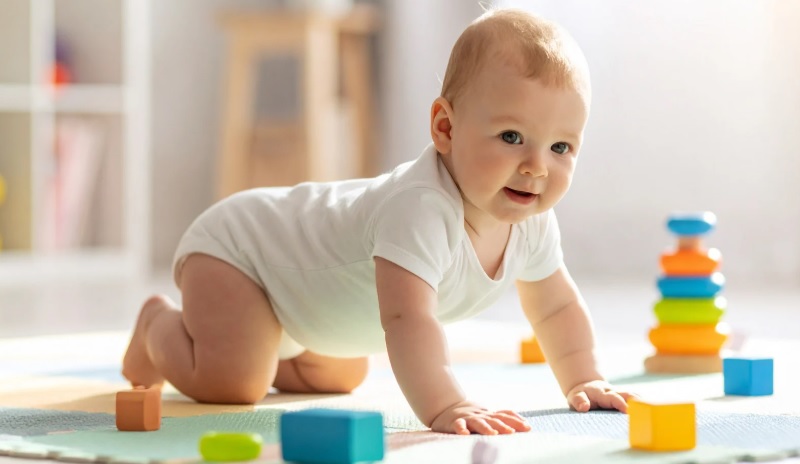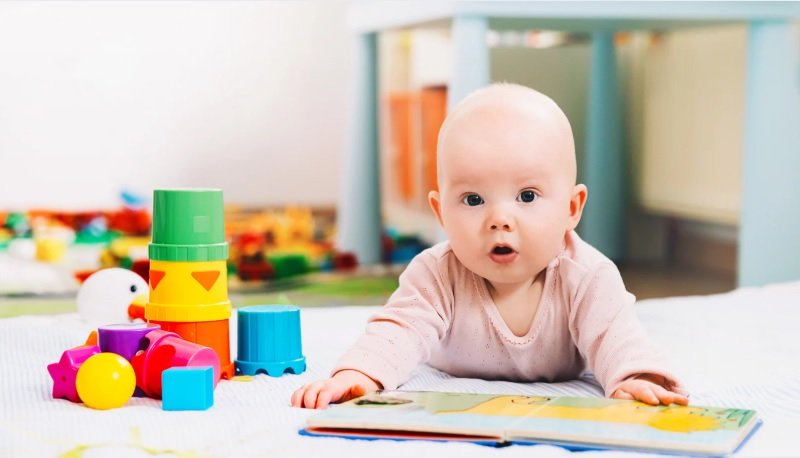
6 Month Old Milestones represent a major turning point in a baby’s first year. Many parents wonder what skills their baby should master at this age. Does your child’s behavior match typical growth patterns around six months?
By six months, most babies sit with minimal support, roll both ways, and respond actively to sounds and faces. They babble consonant sounds, reach for objects, and recognize familiar caregivers clearly. Pediatric guidelines from the CDC confirm these milestones as strong indicators of healthy physical and cognitive development.
Renowned pediatrician Dr. T. Berry Brazelton described this stage as a leap toward independence and social engagement. Still, development does not follow a rigid script for every child. So, what other 6 month old developmental milestones matter at six months, and how can parents support them effectively?
What Should a 6 Month Old Baby Be Able to Do?
At six months, infants typically demonstrate noticeable gains across physical, cognitive, social, and communication domains. While every baby develops at an individual pace, there are widely recognized developmental patterns that help benchmark progress.
Physically, most six-month-old babies show improved head and neck control, increased upper body strength, and more coordinated movements. Cognitively, they begin to recognize familiar faces, respond to their name, and explore objects with curiosity and intention. Socially and emotionally, babies become more expressive, using sounds, facial expressions, and gestures to interact with caregivers.
It is important to remember that six month milestones are ranges, not rigid deadlines. Variations are normal, and a baby may excel in one area while progressing more gradually in another.
The Complete 6 Month Old Milestones Checklist
This checklist provides a structured overview of the most common developmental milestones observed around six months of age.
Physical and Motor Milestones
- Rolls over in both directions (front to back and back to front)
- Sits with minimal support or briefly without support
- Pushes up with straight arms when lying on the stomach
- Brings hands to mouth intentionally
- Transfers objects from one hand to the other
Cognitive Milestones
- Shows curiosity about objects and tries to reach for them
- Brings objects to the mouth to explore
- Begins to understand cause-and-effect relationships
- Responds to sounds by making sounds
Language and Communication Milestones
- Babbles using consonant sounds such as “ba,” “da,” or “ma”
- Responds to own name
- Vocalizes pleasure and displeasure
- Takes turns making sounds with caregivers
Social and Emotional Milestones
- Recognizes familiar people and distinguishes strangers
- Enjoys social play and interaction
- Responds to others’ emotions
- Expresses joy through laughter and smiles
This 6 month milestones checklist serves as a general reference point and should be interpreted in the context of overall development rather than isolated behaviors.
What Should You Be Doing with a Baby at 6 Months?
Caregiver engagement plays a critical role in reinforcing developmental milestones at six months. Intentional, age-appropriate interaction supports physical strength, cognitive growth, and emotional security.
Encourage Movement and Exploration
Provide daily supervised tummy time and safe floor play to promote rolling, sitting, and reaching. Allow the baby to explore textures, shapes, and safe household objects.
Stimulate Language Development
Talk, sing, and read to your baby frequently. Narrate daily activities and respond to babbling to reinforce early communication skills.
Support Social and Emotional Growth
Engage in face-to-face play, make eye contact, and mirror your baby’s expressions. Games such as peekaboo help develop social awareness and anticipation.
Establish Predictable Routines
Consistent feeding, sleep, and play routines foster a sense of security and help regulate behavior.
Active participation in daily interactions is more impactful than formal instruction at this age.
The Key 6-Month-Old Developmental Milestones for Infants
At six months, development becomes increasingly integrated, with physical abilities supporting cognitive and social advancements.
Gross Motor Development
Improved core strength allows many babies to sit with support and roll efficiently. These skills lay the groundwork for crawling and standing in the months ahead.
Fine Motor Development
Hand-eye coordination improves significantly. Babies begin to grasp objects intentionally and manipulate them with growing precision.
Sensory Development
Vision becomes sharper, and babies can track moving objects smoothly. Auditory discrimination improves, allowing recognition of familiar voices.
Emotional Attachment
Secure attachment deepens as infants show preference for primary caregivers and may express mild separation anxiety.
These six months child’s milestones reflect the increasing complexity of infant development and the interconnected nature of growth domains.
What Are Red Flags in Child Development?
While variability is normal, certain signs may warrant further evaluation by a pediatric healthcare professional.
Potential red flags at six months include:
- Poor head control or significant muscle stiffness or floppiness
- Inability to roll in either direction
- Lack of response to sounds or visual stimuli
- Absence of babbling or vocalization
- Limited eye contact or social engagement
- Difficulty bringing objects to the mouth
Early identification and intervention can significantly improve outcomes. If concerns arise, consultation with a pediatrician or developmental specialist is advised.
What Skills Should a Baby Have at 6 Months?
By six months, babies typically demonstrate a blend of emerging and established skills that reflect healthy development.
Communication Skills
- Vocal play with varied sounds
- Recognition of familiar voices
- Responsive interaction during conversations
Problem-Solving Skills
- Exploring objects through mouthing and manipulation
- Reaching for toys intentionally
- Showing persistence when attempting to grasp objects
Self-Regulation Skills
- Ability to self-soothe briefly
- Increased alertness during play
- More predictable sleep and feeding patterns
These foundational skills support future learning, mobility, and social interaction.
Six Month Old Milestones – Feeding Milestones
Feeding development undergoes a significant shift around six months, as many infants begin transitioning to complementary foods alongside breast milk or formula.
Readiness for Solid Foods
Common signs of readiness include:
- Sitting with support
- Good head and neck control
- Loss of tongue-thrust reflex
- Interest in food during family meals
Typical Feeding Skills
- Opening mouth when offered food
- Swallowing soft purees
- Beginning to explore different textures and tastes
Nutritional Considerations
Iron-rich foods are particularly important at this stage. Introduce single-ingredient foods gradually and observe for any adverse reactions.
Feeding at six months is as much about skill development and exploration as it is about nutrition.
Commonly Asked Questions about 6 Month Developmental Milestones (FAQs)
How does my 6 month old learn social cues and brain development?
At six months many babies learn to coo, mimic sounds, and show social smiles; brain development supports object permanence and back and forth vocal play. Babies at this age also begin to reach and grasp for toys, respond to peek-a-boo and cuddle to soothe comfort.
When should I introduce solid foods and a spoon at 4 months to 6 months?
Around 4 to 6 months some babies show readiness for solid foods; you may introduce your baby to purees and try a spoon. Watch hunger cues, start small, and consult your children’s hospital or pediatrician. Babies may progress at different rates, so observe and adapt.
What motor development milestones may reach in this age group?
Baby will start to roll, sit with support, and rock back and forth as core strength improves. They reach in this age group for toys, may reach and grasp for toys purposefully, and soon be crawling in some infants while others develop at different rates.
How do babies learn language — coo, mimic sounds, and become social beings?
Babies learn to coo, babble, and may mimic sounds; they also begin using different sounds to express emotion. These social beings enjoy back and forth vocal play, respond to their name, and caregivers can help your baby by talking, singing, and naming new things frequently.
How can I soothe and help my baby sleep with a mobile and cuddle?
To soothe at six months, cuddle, use gentle rocking, a mobile, and consistent routines; baby is also learning object permanence and may cry when separated. Establish calming rituals before sleep, watch for hunger signs, and avoid putting small toys that could choke in the crib.
How much should I offer when I introduce your baby to solids — is 6 ounces enough?
When introducing solids, offer small tastes while continuing breastmilk or formula; a serving might be only 6 ounces of infant cereal mixed thinly. Observe if your baby tells the difference between textures, start with single ingredients, and introduce new things slowly to monitor reactions carefully.
What safety steps prevent choke and support reach and grasp for toys?
Babies reach and grasp for toys purposefully; childproofing is vital. Remove small objects, supervise feeding to prevent choke hazards, and teach safe play. Children’s hospital guidance can help identify risks and development milestones so you can see if your baby needs extra evaluation or support.
How can games like peek-a-boo help my baby understand object permanence?
Play peek-a-boo and mirror games to help your baby understand people remain even when hidden; these games reinforce object permanence. Introduce your baby to simple toys and social routines, cuddle often, and respond to cues to promote attachment and early social and emotional brain development.
Conclusion
The six-month milestone represents a dynamic phase of rapid growth, discovery, and interaction. Understanding developmental expectations empowers caregivers to provide appropriate support while recognizing that each child follows a unique trajectory. By monitoring progress across physical, cognitive, social, and feeding domains, parents can confidently nurture their baby’s development and address concerns proactively. With informed guidance and responsive caregiving, the journey through early infancy becomes both rewarding and developmentally enriching.
Recommended posts
- When Is the First Infant Social Smile? (A Clear Timeline)
- Infant Milestones by Month for Tracking Baby Growth & Skills
- When Can Infants Crawl? (3 Tricks To Crawl Sooner)
- Encouraging Rolling Over Milestones: The Simple Daily Habits